
Energy Efficiency Upgrades Before Solar Installation
Energy efficiency upgrades before solar installation can shrink system size and boost savings. Call (510)-663-7016 to plan your project.

By Julia Ellis
You have probably heard that solar panels can slash your electricity bill and increase your home's value. But here is the part many homeowners miss: if your house is leaky, poorly insulated, or running an aging HVAC system, you are essentially pouring money into a bucket with holes. Installing solar on an inefficient home is like buying a bigger fuel tank for a car that guzzles gas. The smartest financial move is to tackle energy efficiency upgrades before solar installation, so your new system is sized correctly, performs optimally, and delivers the savings you expect.
In this guide, we will walk through the most impactful efficiency upgrades, explain how to sequence them with your solar project, and show how these improvements can reduce the size (and cost) of the solar array you need. We will also cover how to talk to contractors about bundling upgrades and solar into a single project, and where to find qualified professionals who understand both sides of the equation.
Why Efficiency Upgrades Should Come Before Solar
Solar panels generate electricity based on the amount of sunlight they receive, but the amount of electricity your home consumes is determined by its efficiency. If your home uses 12,000 kWh per year, you need a larger solar system than a similar home that uses 8,000 kWh. By reducing your energy load first, you can install a smaller, less expensive solar system and still meet your needs. This is the core principle behind the "efficiency first" approach.
Beyond system size, efficiency upgrades improve the return on your solar investment. A smaller system costs less upfront, may qualify for the same percentage-based tax credits, and can pay for itself faster. Additionally, many efficiency upgrades (like insulation and air sealing) have their own incentives, and combining them with solar can maximize your overall savings. Finally, an efficient home is more comfortable, healthier, and more resilient, which matters whether you stay for decades or sell in a few years.
Key Energy Efficiency Upgrades to Consider
Not all efficiency upgrades are equal. The best ones target the biggest sources of energy waste in your home. Here are the upgrades that typically deliver the highest impact and are most worth doing before you go solar.
Insulation and Air Sealing
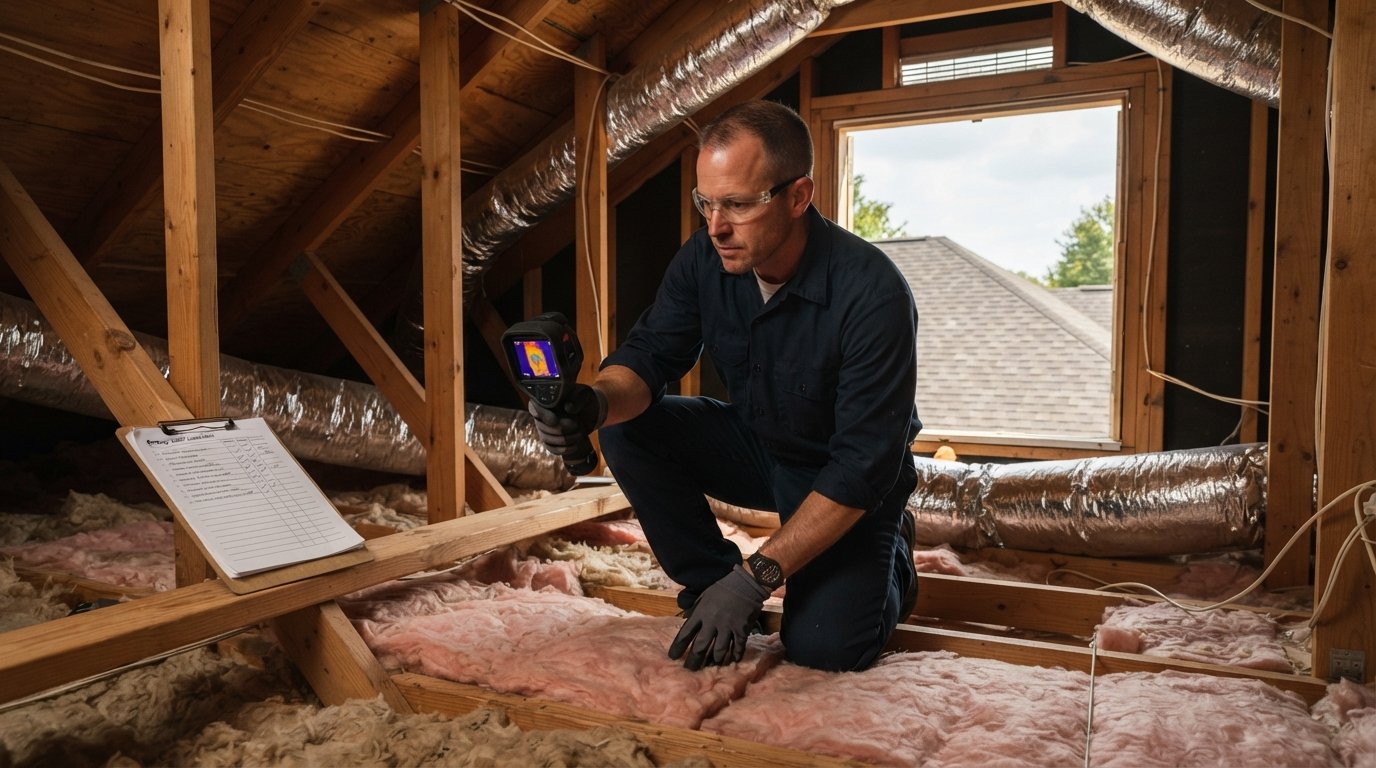
Heat loss in winter and heat gain in summer are the largest drivers of energy waste in most homes. Poor insulation in attics, walls, and floors allows conditioned air to escape, forcing your heating and cooling systems to work harder. Air sealing (plugging gaps around windows, doors, and penetrations) complements insulation by stopping drafts. Together, these upgrades can reduce heating and cooling costs by 20% or more, according to the U.S. Department of Energy. Before installing solar, have a home energy audit to identify insulation gaps and air leaks, then address them. This will shrink your overall electricity demand and allow you to size your solar system more accurately.
HVAC System Upgrades
Heating, ventilation, and air conditioning (HVAC) accounts for about half of a typical home's energy use. If your furnace or air conditioner is more than 10 to 15 years old, replacing it with a high-efficiency model (look for ENERGY STAR certification) can significantly cut your electricity consumption. Heat pumps, in particular, are highly efficient for both heating and cooling and pair well with solar because they run on electricity. Upgrading your HVAC before solar ensures that your solar system is sized for the new, lower load, not the old energy hog.
Window and Door Upgrades
Old, single-pane windows and leaky doors are major culprits for energy loss. Upgrading to double- or triple-pane windows with low-E coatings and proper sealing can reduce heat transfer and drafts. While window replacement can be expensive, it often improves comfort and reduces outside noise, and it may be eligible for tax credits. If a full window replacement is not in the budget, prioritize sealing and weatherstripping existing windows and consider storm windows as a lower-cost alternative. For solar sizing, better windows mean less heating and cooling demand, which translates to a smaller solar array.
Lighting and Appliance Upgrades
While less glamorous, switching to LED lighting and upgrading to ENERGY STAR appliances (refrigerator, washer, dryer, dishwasher) reduces your baseline electricity consumption. These upgrades are relatively inexpensive and can be done quickly. They also compound with other efficiency measures. Before you finalize your solar design, replace any remaining incandescent or CFL bulbs with LEDs and consider upgrading old appliances. The cumulative effect can be a 10% to 20% reduction in electricity use, which directly reduces the number of solar panels you need.
Smart Thermostats and Energy Management
Smart thermostats learn your schedule and preferences, automatically adjusting temperatures to save energy when you are away or asleep. They can be controlled remotely and often provide reports on energy usage. Pairing a smart thermostat with your solar system allows you to maximize self-consumption of solar energy, for example by pre-cooling or pre-heating your home when solar production is high. This is a low-cost upgrade that enhances the value of your solar investment.
How to Sequence Efficiency Upgrades and Solar Installation
The order in which you tackle upgrades matters. Ideally, you want to complete efficiency upgrades first, then size and install your solar system. However, practical and financial constraints may require a phased approach. Here is a sensible sequence:
- Start with a home energy audit. A professional audit will identify the biggest opportunities for improvement and give you a prioritized list. Many utilities offer free or discounted audits.
- Tackle low-cost, high-impact measures first. Air sealing, weatherstripping, LED lighting, and smart thermostats are inexpensive and can be done immediately.
- Plan major upgrades (insulation, HVAC, windows) before solar. If your HVAC is nearing the end of its life or your insulation is inadequate, address these before finalizing your solar design. This ensures your solar system is sized for the post-upgrade load.
- Get quotes for solar after efficiency upgrades are complete or at least planned. Share the expected efficiency improvements with your solar installer so they can model the reduced energy consumption.
- Consider bundling upgrades and solar into one project. Some contractors offer combined efficiency and solar packages, which can simplify financing and scheduling.
If you must install solar before completing all efficiency upgrades, communicate your plans to the installer. They can design a system with future reductions in mind, perhaps leaving room for expansion or using a modular design. However, sizing a system for current usage and then reducing usage later could result in an oversized system, which may not be cost-effective. It is generally better to wait until major efficiency work is done.
How Efficiency Upgrades Change Solar System Sizing
Solar system sizing is based on your annual electricity consumption, solar irradiance in your area, and the efficiency of the panels. When you reduce consumption through efficiency upgrades, you can downsize the system. For example, if your home uses 10,000 kWh per year and you install a 7 kW solar system to offset 100% of that usage, but then you upgrade insulation and HVAC and reduce usage to 8,000 kWh, you could have installed a 5.6 kW system instead. The smaller system costs less, may fit on a smaller roof area, and still meets your needs.
Moreover, efficiency upgrades can affect the optimal solar design. For instance, if you upgrade to a heat pump, your electricity usage may shift from gas to electric, increasing your electricity consumption but reducing overall energy costs. Your solar installer should account for this fuel switching when sizing the system. Similarly, if you add an electric vehicle charger, that increases electricity demand, so you may need a larger system. The key is to model your post-upgrade energy profile as accurately as possible.
To get the sizing right, provide your installer with at least 12 months of utility bills after efficiency upgrades are complete. If upgrades are planned but not yet done, share the expected changes and ask for a sensitivity analysis. A reputable installer will help you avoid oversizing or undersizing.
Talking to Contractors About Bundled Upgrade Projects
Many homeowners prefer to bundle efficiency upgrades with solar to streamline the process, access combined financing, and ensure compatibility. When interviewing contractors, ask the following questions to ensure they understand the efficiency-first approach:
- Do you offer a home energy audit or partner with an auditor to assess my home's efficiency before designing the solar system?
- Can you coordinate insulation, HVAC, or window upgrades as part of the project, or do you work with trusted subcontractors?
- How do you account for planned efficiency improvements when sizing the solar system?
- Are there financing options that cover both efficiency upgrades and solar?
- What incentives (federal, state, local, utility) are available for each upgrade, and how do they stack?
If you are a contractor looking to reach homeowners who are actively planning solar and efficiency projects, consider lead generation services that connect you with high-intent customers. For example, solar installation leads can provide pre-qualified homeowners who are already interested in solar and may be receptive to efficiency upgrades. Similarly, platforms like AttorneyLeads serve the legal sector but illustrate how specialized lead generation can connect professionals with motivated clients. For home improvement professionals, HomeRemodelingLeads offers exclusive and shared leads in categories including solar, roofing, windows, HVAC, and more, helping contractors find homeowners who are ready to invest in efficiency and renewable energy.
When discussing bundled projects with contractors, be clear about your goals and budget. Ask for a detailed proposal that separates the costs of efficiency upgrades and solar, so you can see the return on each. Also confirm that the contractor is licensed, insured, and experienced with both efficiency and solar installations. A contractor who specializes only in solar may not have deep expertise in insulation or HVAC, so verify their qualifications or ask for referrals.
Incentives and Financing for Efficiency and Solar
Federal, state, and local incentives can significantly reduce the cost of both efficiency upgrades and solar. The federal solar Investment Tax Credit (ITC) allows you to deduct a percentage of your solar installation costs from your federal taxes. Some efficiency upgrades, such as geothermal heat pumps, small wind turbines, and fuel cells, also qualify for the residential clean energy credit. Additionally, many utilities offer rebates for insulation, HVAC upgrades, and smart thermostats. Be sure to check the Database of State Incentives for Renewables and Efficiency (DSIRE) for programs in your area.
Financing options include home equity loans, energy-efficient mortgages (which can finance both the home purchase and efficiency upgrades), and property assessed clean energy (PACE) programs, which allow you to repay upgrades through your property tax bill. Some solar installers offer bundled financing that covers both efficiency and solar. Compare offers carefully and consider the total cost of ownership over the life of the upgrades.
Avoiding Common Mistakes
One common mistake is installing solar before addressing major efficiency issues, resulting in an oversized system and lower returns. Another is focusing only on solar and neglecting low-cost efficiency measures like air sealing and LED lighting, which can deliver quick paybacks. Some homeowners also forget to account for future changes, such as adding an electric vehicle or switching to a heat pump, which can increase electricity demand. Finally, failing to research incentives and financing can leave money on the table.
To avoid these pitfalls, start with an energy audit, prioritize upgrades based on cost-effectiveness, and work with contractors who take a whole-home approach. Remember that efficiency upgrades and solar are complementary: together, they create a more comfortable, resilient, and affordable home.
By taking the time to improve your home's energy efficiency before going solar, you ensure that your investment delivers maximum savings and performance. Whether you are a homeowner planning a project or a contractor serving these customers, the efficiency-first approach is a win-win.