
Flooring Installation Lead Sales Conversion Tips That Close Jobs
Turn more flooring installation lead sales conversion tips into signed jobs with faster estimates and smarter follow-up. Call (510)-663-7016 to get started.

By Lila Kensington
Flooring leads are not the problem. Most contractors who buy flooring installation leads from a platform like HomeRemodelingLeads report a steady flow of homeowner inquiries for laminate, hardwood, refinishing, and related projects. The gap between a lead and a signed contract usually comes down to sales execution. A homeowner who requests a flooring quote is already motivated. They have a room that looks tired, a budget in mind, and a timeline pressing on them. If your conversion rate sits below where you want it, the fix is rarely more leads. The fix is a tighter sales process from the first phone call to the signed proposal. The tips below are built for flooring contractors who want to turn more of those inquiries into booked installation jobs.
Lead With Visuals: Show Flooring Samples Before You Talk Price
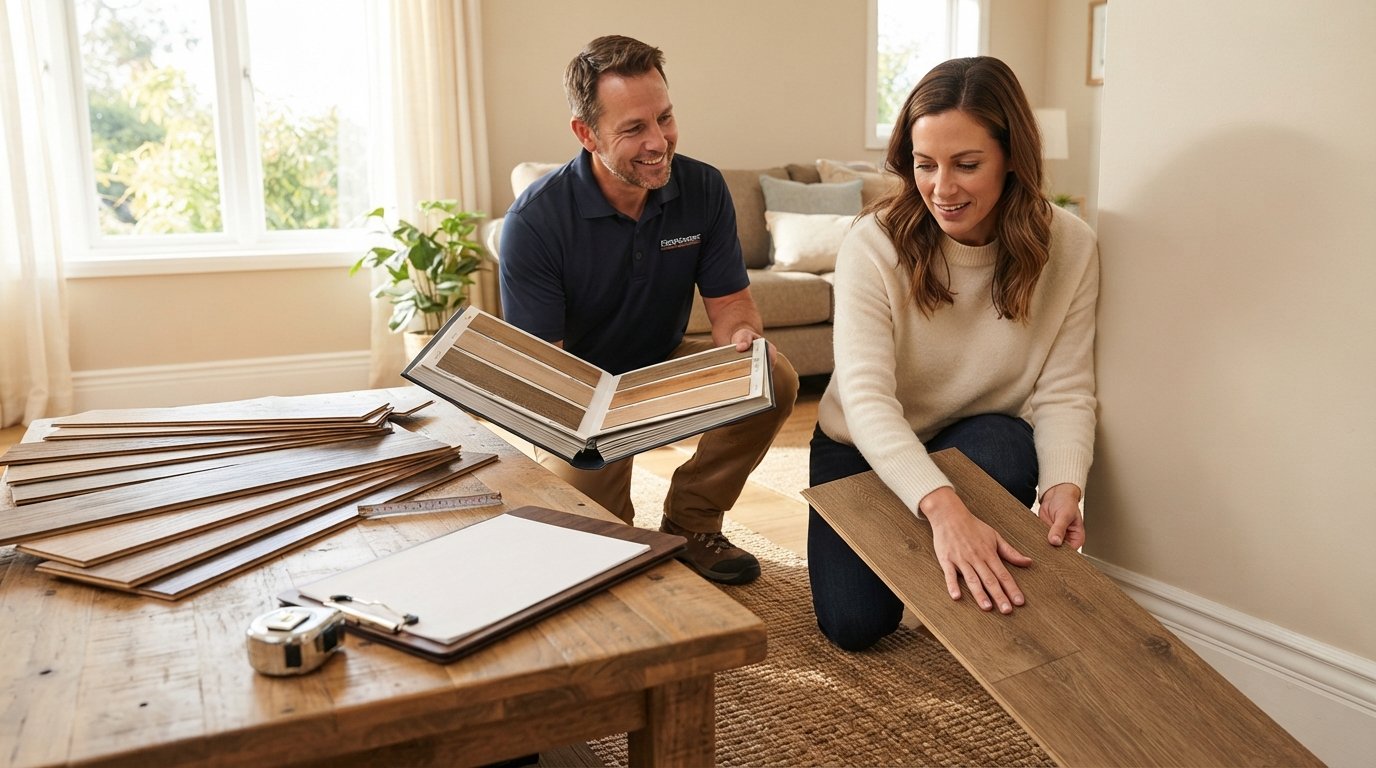
Flooring is a visual purchase. Homeowners struggle to imagine how a plank width, stain color, or texture will look in their living room under their own lighting. Contractors who bring samples to the first appointment and walk the homeowner through options consistently convert better than contractors who arrive with a catalog and a price sheet. The sample book does more selling than any script. When a homeowner can run a hand across a matte finish or hold a plank against their existing trim, the decision moves from abstract to concrete.
Bring a curated set of samples that matches the lead type. A laminate lead from HomeRemodelingLeads may only need three or four options in the most popular tones, while a hardwood lead benefits from showing species, plank widths, and finish sheens. Pair the samples with a few photos of completed jobs in similar homes. Homeowners respond to proof. If you installed a wide-plank oak floor in a nearby neighborhood, that photo does more to build trust than a paragraph about your experience. Keep the sample kit organized so the appointment feels professional rather than improvised.
Visual selling also shortens the decision cycle. Homeowners who see samples in person tend to commit to a direction during the visit instead of shopping for weeks. That speed matters because flooring leads cool quickly. A homeowner who requests quotes from three contractors will often sign with the one who made the choice easiest. Samples, photos, and a clear recommendation do exactly that.
Offer Financing and Promotions That Remove Price Friction
Price is the most common objection in flooring sales, and it is rarely about the total number. It is about the timing of the payment. A homeowner who balks at a $9,000 hardwood installation may happily sign when the cost is spread over 24 months with a manageable monthly payment. Financing turns a large one-time expense into a budget line the homeowner can absorb. Contractors who partner with a financing provider and mention it early in the conversation close more jobs than contractors who save it as a last resort.
Promotions work the same way when they are specific and time-bound. A generic discount feels like a sales tactic, but a concrete offer does not. Consider these approaches:
- Bundle a free moisture test or subfloor inspection with every installation quote.
- Offer a per-square-foot discount on jobs booked within a set window, such as two weeks.
- Include basic furniture moving or old flooring removal at no extra charge for full-room installs.
- Provide a small credit toward refinishing when the homeowner books a refinish and a new install together.
The key is to make the promotion easy to understand and easy to verify. Homeowners distrust offers that require fine print. State the value plainly, attach a deadline, and train your sales staff to present it as a normal part of the quote rather than a pressure tactic. Financing and promotions should feel like helpful options, not desperate incentives. When presented well, they shift the conversation from whether the homeowner can afford the project to how they want to structure the payment.
It also helps to know your numbers before you offer anything. If you understand your margins on laminate, hardwood, and refinishing work, you can build promotions that protect profit while still giving the homeowner a reason to sign now. Contractors who guess at discounts often erode their margin without improving close rates. Contractors who plan their offers close more jobs at healthier prices.
Schedule In-Home Estimates Fast and Confirm Them
Speed is one of the strongest predictors of conversion on flooring leads. A homeowner who requests a quote is usually contacting several contractors within the same week. The first contractor to arrive at the door often wins the job, not because they are the best, but because they are the first to make the project feel real. Aim to schedule the in-home estimate within 48 hours of the lead coming in, and sooner when possible. A lead that sits for four days is a lead that has already talked to your competitor.
Fast scheduling requires a simple process. When a flooring lead arrives, call the homeowner within minutes, not hours. Offer two specific appointment windows rather than asking when they are free. Confirm the appointment by text the day before and again on the morning of the visit. These small steps reduce no-shows dramatically. Homeowners appreciate the professionalism, and your estimator arrives at a confirmed appointment instead of a maybe.
During the call, gather the details that make the estimate efficient: room size, current flooring type, subfloor condition if known, and the homeowner's timeline. This lets your estimator arrive prepared with the right samples and a rough price range. It also signals to the homeowner that you listened. A contractor who remembers that the homeowner wants pet-friendly flooring for a finished basement stands out immediately. For a deeper look at how flooring projects are scoped and priced, see this guide on floor installation or replacement costs, which covers the steps homeowners expect to see in a quote.
Follow Up With Personalized Quotes, Not Generic Emails
The estimate is not the end of the sale. It is the midpoint. Many flooring contractors send a quote and then wait, assuming the homeowner will call back if they are interested. That assumption costs jobs. A personalized follow-up within 24 hours of the estimate keeps the project top of mind and gives the homeowner a chance to ask questions while the visit is still fresh. Generic follow-up emails that restate the price do little. Personalized follow-up that references the specific rooms, samples, and concerns discussed during the visit moves the deal forward.
A strong follow-up includes a clear summary of what was quoted, the samples the homeowner liked, and one or two next steps. For example, if the homeowner was torn between two laminate options, the follow-up can include photos of both installed in similar rooms. If they mentioned concern about moving furniture, the follow-up can confirm that the crew handles it. This level of detail shows the homeowner you were paying attention, and it makes the decision easier.
Follow-up should continue beyond the first message. A short sequence over the next two weeks works well: a check-in call on day two, a text with a relevant photo or promotion on day five, and a final call on day ten that asks directly whether the homeowner is ready to schedule. Keep each touch brief and useful. The goal is not to pester but to stay present while the homeowner compares options. Homeowners rarely sign with the contractor they remember least.
Ask for the Sale and Handle Objections Directly
Many flooring contractors do excellent installation work and still lose jobs because they never ask for the sale. They present the quote, answer questions, and leave, hoping the homeowner will reach out. That passive approach leaves the decision entirely in the homeowner's hands. A confident close is not pushy. It is a clear invitation to move forward. At the end of the estimate, ask a direct question: "Would you like to get this scheduled for the week of the 14th?" The question assumes a decision is possible and gives the homeowner permission to say yes.
Objections are part of the process, and each one has a practical response. The most common objections in flooring sales fall into a few categories, and preparing for them in advance keeps the conversation calm and productive.
- "It costs too much." Reframe around value and payment options. Break the cost down by square foot, compare it to the lifespan of the floor, and present financing if it fits.
- "I need to think about it." Ask what specifically they want to think through. The answer usually reveals a real concern, such as color choice or timing, that you can resolve on the spot.
- "I want to get other quotes." Encourage it, then ask what would make your proposal the one they choose. Offer to hold the promotion or schedule a follow-up before they decide.
- "The timeline is too long." Show your calendar and offer the earliest available slot, or explain what drives the timeline so the homeowner understands the value of booking now.
Handling objections well requires listening more than talking. When a homeowner raises a concern, repeat it back to confirm you understood, then respond with a specific answer rather than a general reassurance. This approach builds trust and keeps the conversation moving toward a decision. Contractors who treat objections as information rather than rejection close more jobs and build stronger relationships with the homeowners they serve.
Build a Conversion System Around Your Flooring Leads
The tips above work best when they are part of a repeatable system rather than one-off efforts. A flooring contractor who answers leads within minutes, schedules estimates within two days, brings samples to every visit, follows up with personalized quotes, and asks for the sale will outperform a contractor who does any one of these things well but ignores the rest. The system is what produces consistent results across dozens of leads, not just the ones that happen to go smoothly.
Track your numbers so you know where the system leaks. Measure how quickly you respond to new leads, how many estimates you schedule, how many estimates turn into quotes, and how many quotes convert to signed jobs. Each of these metrics points to a specific fix. A low estimate rate points to scheduling problems. A low close rate points to presentation or follow-up problems. Knowing the difference lets you improve the right part of the process.
It also helps to align your sales process with the lead source. HomeRemodelingLeads delivers pre-qualified flooring leads from homeowners actively seeking installation and refinishing work, including laminate, wood, and related projects. Contractors who buy those leads get a head start because the homeowner has already expressed intent. The sales process still has to do its job, but the raw material is strong. Building a disciplined conversion system around that raw material is how flooring contractors turn lead spend into predictable revenue. For contractors who also work across categories, the same principles apply to roofing, windows, and bathroom leads, and businesses that want to understand how legal lead generation platforms structure exclusive, pre-screened inquiries can look at AttorneyLeads as an example of a real-time, practice-specific lead exchange.
The flooring contractors who win the most jobs are not always the ones with the lowest prices or the largest crews. They are the ones who make the buying process easy. They show up fast, bring the right samples, explain financing clearly, follow up with care, and ask for the sale without hesitation. Those habits turn flooring installation leads into signed contracts, and they turn one-time homeowners into repeat customers and referral sources. Start with one or two of the tips above, measure the results, and add the next habit once the first is working. Conversion improves one disciplined step at a time.