
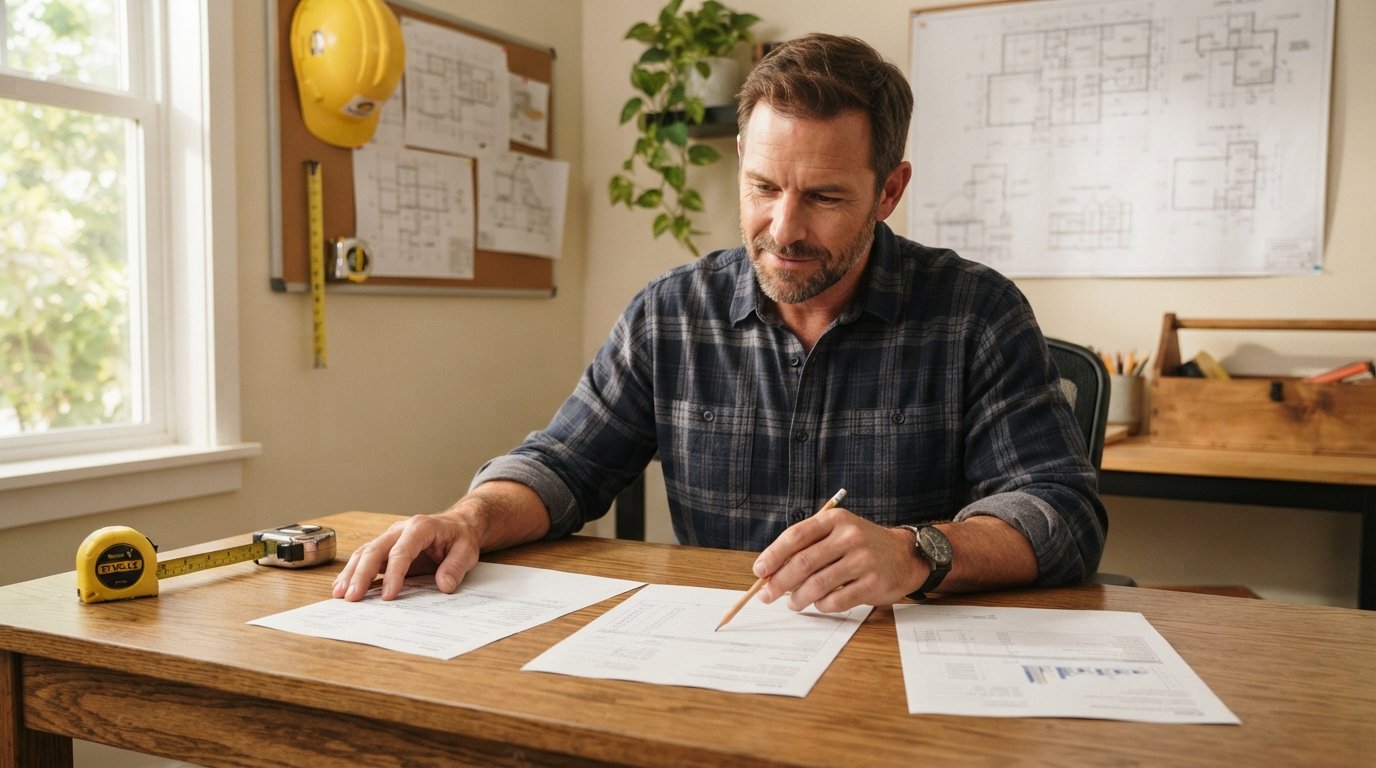
Home Remodeling Quotes Evaluation: Contractor's Winning Bid Guide
Learn how homeowners evaluate remodeling quotes and structure bids that win without cutting margin. Call (510)-663-7016 for expert guidance.

By Adam Miller
You have spent hours walking the property, measuring, and pricing. The quote goes out, and then the silence begins. Meanwhile, the homeowner is staring at three or four bids side by side, trying to decode line items, allowances, and schedules. Winning more remodeling work is not about being the cheapest; it is about being the easiest to say yes to. This guide pulls back the curtain on how homeowners evaluate home remodeling quotes and shows you, the contractor, how to present bids that win without sacrificing margin. If you are sourcing more opportunities to quote, platforms like AI-powered contractor marketplaces can help you find high-intent homeowners, but the bid itself must close the deal.
What Homeowners Compare First When Quotes Sit Side by Side
Homeowners rarely read every word of every quote on the first pass. Instead, they scan for a handful of anchor points that allow them to sort the bids into mental categories: serious, risky, or overpriced. Understanding this scanning behavior is the first step in structuring a winning bid. The anchors they look for are not always the ones contractors expect. Price gets noticed, but it is rarely the deciding factor on its own. What matters more is how confidently and clearly the bid answers the questions running through the homeowner's mind.
When a homeowner places two or three quotes next to each other, they are subconsciously checking for completeness, transparency, and a sense of control. A bid that feels complete reduces the fear of surprise costs. A bid that is transparent reduces the anxiety of being taken advantage of. A bid that gives the homeowner a sense of control over decisions makes them feel like a partner rather than a passenger. Contractors who understand these psychological checkpoints can design their quotes to hit every one of them.
The specific comparison points usually include the bottom-line total, the scope of work described, the materials or brands mentioned, the timeline, the payment schedule, and the warranty. But here is the twist: homeowners often compare these elements not for accuracy but for coherence. If the total price is low but the scope is vague, they assume something is missing. If the warranty is short, they assume the work is risky. If the schedule is open-ended, they assume delays. Your job is to make every element reinforce the others so the bid reads as a coherent, trustworthy story.
Line-Item Detail Versus Lump Sum: How Each Reads to a Buyer
There is an ongoing debate among remodelers about whether to present quotes as detailed line items or as a lump-sum price. Both formats have legitimate uses, but they read very differently to a homeowner who is comparing bids. A line-item quote breaks the project into labor, materials, permits, and other categories with individual prices. A lump-sum quote presents a single total for the entire scope. Neither is inherently better, but each sends a different message about transparency and risk.
Homeowners often perceive line-item quotes as more transparent because they can see where the money is going. However, line-item pricing also invites scrutiny of individual margins. A homeowner might fixate on the framing cost or the markup on tile, ignoring the overall value. Lump-sum pricing, on the other hand, keeps the conversation at the level of the total investment and the outcome. It signals that you are selling a result, not a collection of parts. But lump-sum quotes can feel opaque to a homeowner who has been burned before or who has a detail-oriented personality.
The winning approach often depends on the homeowner and the project type. For complex projects with many moving parts, a hybrid approach works well: provide a clear scope narrative with allowances and a total price, then attach a separate detailed breakdown as an appendix. This gives the homeowner the comfort of detail without turning the main quote into a spreadsheet. It also positions you as organized and professional, which differentiates you from contractors who hand over a single number on a napkin.
When presenting line items, always frame them around value rather than cost. Instead of listing "demolition labor: $2,400," describe what that labor accomplishes: "Careful demolition and debris removal, including protection of adjacent finishes." The same number feels different when attached to a benefit. Homeowners compare stories as much as they compare prices, and the contractor who tells a better story about the work often wins even at a higher number.
Presenting Allowances So Homeowners Do Not Read Them as Hidden Costs
Allowances are one of the most misunderstood elements of a remodeling quote. Contractors use them to account for items the homeowner has not yet selected, such as tile, fixtures, or lighting. Homeowners, however, often see an allowance and assume it is a placeholder for a surprise bill later. This perception gap can sink an otherwise strong bid. The solution is not to eliminate allowances but to present them in a way that builds trust rather than suspicion.
The first step is to explain what an allowance covers and why it exists. A simple sentence in the quote can do wonders: "Allowances are included for items you will select, so you control the final cost of those finishes." This reframes the allowance as a tool for homeowner control rather than a hidden cost. The second step is to provide a realistic range for each allowance and state what happens if the homeowner goes over or under. Transparency about the overage process removes the fear of the unknown.
Another effective technique is to include a separate allowance schedule that lists each allowance item, the budgeted amount, and a few examples of what that budget buys. For example, a $3,000 tile allowance might include a note that it covers standard ceramic or porcelain tile installed, with a list of upgrade options and their price differences. This turns the allowance into a shopping guide, which homeowners appreciate. It also positions you as a consultant rather than a contractor trying to hide costs.
Finally, always show the total project cost with allowances included and clearly labeled. Some contractors present a base price plus allowances, which can feel like a bait-and-switch. A single total with a note that allowances are included reads as honest and complete. Homeowners comparing bids will gravitate toward the quote that feels most predictable, and clear allowance presentation is a major predictor of trust.
Warranty and Schedule Language That Differentiates a Bid
Warranty and schedule are two areas where many contractors write the bare minimum, and that is a missed opportunity. Homeowners use these sections to gauge risk and reliability. A vague warranty or an open-ended schedule signals that the contractor has not thought through the long-term relationship. A specific, well-written warranty and schedule section, on the other hand, can differentiate your bid from competitors even if your price is higher.
Warranty language should be specific about what is covered, for how long, and what the homeowner must do to maintain coverage. Instead of "one-year warranty on workmanship," write "One-year warranty on all labor and installation. We will repair any defects in workmanship at no cost within 12 months of completion, provided the homeowner follows the maintenance guidelines included in the project binder." This level of detail shows confidence and professionalism. It also gives the homeowner a concrete reason to choose you over a cheaper bid with a vague warranty.
Schedule language should be equally specific. Homeowners fear delays and uncertainty, so a bid that outlines a clear timeline with milestones reduces anxiety. Instead of "project will start in 2-3 weeks and take 4-6 weeks," break it down: "Pre-construction meeting and material ordering: week 1. Demolition and rough-in: weeks 2-3. Inspection and drywall: week 4. Finishes and fixtures: weeks 5-6. Final walkthrough and punch list: week 7." This level of detail demonstrates that you have a process and that you respect the homeowner's time. It also sets expectations that protect you if minor delays occur.
Another differentiator is to include a communication plan in the schedule section. Homeowners appreciate knowing when and how they will hear from you. A simple note like "You will receive a weekly progress email every Friday and can reach the project manager by phone during business hours" can set you apart from contractors who go silent for days. In a market where trust is the ultimate currency, these small details add up to a winning bid.
Follow-Up Timing After the Quote Is Delivered
Many contractors lose deals not because their bid was weak but because their follow-up was nonexistent or poorly timed. Homeowners often need a few days to process the quotes, discuss with family, and check references. The contractor who follows up too soon can seem pushy, while the one who waits too long can seem disinterested. The sweet spot is a structured follow-up sequence that adds value at each touchpoint.
Research and experience suggest that the first follow-up should happen within 24 to 48 hours after sending the quote. This touchpoint is not about asking for a decision; it is about confirming receipt and offering to answer questions. A short email or text that says "I wanted to make sure you received the quote and see if you have any questions about the scope or timeline" keeps the conversation open without pressure. It also gives the homeowner permission to engage without feeling sold to.
The second follow-up should come about a week later, and it should add value rather than simply check in. Share a relevant article, a photo of similar work, or a helpful tip about the project. For example, if the quote is for a bathroom remodel, you might send a link to a guide on choosing tile or a note about current lead times for fixtures. This positions you as a resource and keeps your bid top of mind. The third follow-up, around two weeks after delivery, can be a direct but low-pressure check-in: "I know you are comparing options. I am happy to walk through any part of the quote or adjust the scope if needed."
It is also important to track how and when you follow up. A simple customer relationship management (CRM) system or even a spreadsheet can help you stay consistent. Contractors who follow up systematically close more deals because they stay in the homeowner's consideration set while competitors fade into silence. If you are generating leads through pay-per-call advertising, having a follow-up process in place ensures those paid opportunities are not wasted. Services like PayPerCallMarketing connect advertisers with publishers to produce high-quality phone calls, but the quote and follow-up are what turn a call into a signed contract.
Structuring the Quote for Maximum Clarity and Trust
Beyond the specific elements of price, allowances, warranty, and schedule, the overall structure of the quote matters. A well-structured quote guides the homeowner through a logical sequence that builds confidence. Start with a brief project summary that restates the homeowner's goals in their own words. This shows you listened and confirms mutual understanding. Then move into the scope of work, broken into phases or areas, with clear descriptions of what will be done.
After the scope, present the investment section with the total price, payment schedule, and allowances clearly labeled. Include a section on what is not included, which prevents misunderstandings later. Then present the warranty and schedule, followed by next steps. This structure mirrors the homeowner's decision journey: understanding the project, understanding the cost, understanding the risk, and knowing what to do next. Each section should be concise but complete, with headings that make it easy to scan.
Visual elements can also improve clarity. Simple diagrams, before-and-after renderings, or material samples can make the quote more tangible. Even a clean, professional layout with consistent fonts and spacing signals that you are organized and detail-oriented. Homeowners often judge the quality of the work by the quality of the paperwork, rightly or wrongly. A polished quote increases perceived value and justifies a higher price.
Finally, always include a clear expiration date on the quote. This creates a gentle urgency without being pushy and protects you from material price fluctuations. A note like "This quote is valid for 30 days from the date above" is standard and fair. It also gives the homeowner a reason to act rather than postpone indefinitely.
Common Quote Mistakes That Cost Contractors the Job
Even experienced contractors make mistakes that undermine their bids. One of the most common is the vague scope. A quote that says "bathroom remodel" without detailing what is included invites the homeowner to assume the worst or to compare unfavorably with a more detailed competitor. Another mistake is inconsistent formatting, which makes the quote hard to read and suggests disorganization. A third is failing to include a payment schedule, which leaves the homeowner uncertain about cash flow and can raise red flags.
Another frequent error is underpricing to win the job, then trying to make up margin through change orders. Homeowners talk to each other, and a contractor known for change orders will struggle to win referrals. It is better to price fairly and communicate value than to win on price and lose on reputation. Similarly, overpromising on timeline can backfire when delays occur. It is better to build a buffer and deliver early than to promise a tight schedule and miss it.
Finally, many contractors neglect to ask for the sale. After presenting the quote, they wait passively for the homeowner to decide. A simple, respectful question like "What questions do you have about the quote, and what would you like to see adjusted?" opens a dialogue and moves the process forward. The contractor who guides the decision without pressure is the one who wins the bid.
Building a Repeatable Winning Bid Process
Winning bids is not about luck; it is about process. Contractors who consistently win have a repeatable system for creating, delivering, and following up on quotes. This system includes templates for different project types, a checklist to ensure nothing is missed, and a follow-up schedule that keeps the conversation alive. It also includes a feedback loop: after each bid, ask the homeowner why they chose you or why they chose someone else. This information is invaluable for refining your approach.
If you are looking to fill your pipeline with more qualified opportunities, consider a lead source that connects you with homeowners actively seeking remodeling services. HomeRemodelingLeads offers pre-qualified leads across categories like roofing, windows, bathroom remodeling, and more, giving you the chance to quote projects that are already in motion. Combined with a strong bid process, those leads become signed contracts rather than missed opportunities.
In the end, the contractor perspective on winning bids comes down to empathy and clarity. Understand what the homeowner is comparing, present your quote in a way that reduces risk and builds trust, and follow up with value. Do that consistently, and you will win more bids without cutting your margin.