Roof Installation or Replacement: Key Steps and Costs
Your roof is your home’s first line of defense against the elements, yet many homeowners postpone critical decisions about it until leaks appear or shingles start landing in the yard. Whether you are building a new home, dealing with storm damage, or facing an aging roof that has reached the end of its lifespan, understanding the difference between roof installation and roof replacement is essential. The choice affects your budget, your home’s curb appeal, and your family’s safety. This guide walks you through the entire process, from assessing your current roof’s condition to hiring the right contractor and financing the project, so you can make an informed decision with confidence.
Roof installation typically refers to putting a roof on a new construction or adding a second layer over an existing one in some cases. Roof replacement, on the other hand, involves tearing off the old roofing material down to the deck and installing a brand new system. Both projects require careful planning, quality materials, and skilled labor. According to the National Roofing Contractors Association, the average asphalt shingle roof lasts 20 to 25 years, so most homeowners will face a replacement at least once during their time in a home. Knowing what to expect can save you from surprise costs and poor workmanship.
Signs You Need a New Roof
Not every roof problem demands a full replacement, but certain indicators should prompt an immediate inspection. Missing or curling shingles, granules collecting in gutters, daylight visible through the roof boards, and unexplained spikes in energy bills are all red flags. If you notice dark streaks or moss growth, that often signals moisture retention, which accelerates deterioration. Interior stains on ceilings or walls are a clear sign of active leaks, and they rarely mean just a minor repair. In our guide on floor installation or replacement, we highlight similar warning signs for flooring, where structural issues hide beneath visible damage.
Beyond visible damage, consider the age of your roof. If it is approaching or exceeding its expected lifespan, proactive replacement is wiser than waiting for a leak during a heavy rainstorm. A professional roofer can assess the decking, underlayment, flashing, and ventilation to determine whether a full replacement is necessary or if a repair will suffice. Remember that a roof replacement is not just about shingles; it is a complete system that includes ice and water shield, drip edge, ridge vents, and proper nail patterns. Cutting corners on any of these components shortens the life of your new roof.
Roof Installation vs. Replacement: What is the Difference?
Many homeowners use the terms interchangeably, but they are distinct processes. Roof installation typically applies to new construction, such as a newly built home or an addition where no roof currently exists. It involves installing the deck, underlayment, flashing, and shingles from scratch. Roof replacement, however, is a tear-off job: the old roofing material is removed entirely, the deck is inspected and repaired as needed, and a new roof system is installed. Some contractors offer a “re-cover” option, where a second layer of shingles is placed over the first, but this is rarely recommended because it hides underlying damage and adds excess weight.
For most existing homes, a full replacement is the best route. It allows inspectors to see the state of the wood deck, which often suffers from rot or water damage that is invisible from the outside. It also gives you a chance to upgrade ventilation and underlayment, which improves energy efficiency and extends the new roof’s lifespan. If your home is new construction, the installation process is more straightforward since you are starting with a clean slate. However, the principles of quality workmanship apply equally to both scenarios.
Choosing the Right Roofing Material
The material you select affects not only the look of your home but also its durability, maintenance needs, and cost. Asphalt shingles are the most popular choice because they balance affordability with performance, and they come in a wide range of colors and styles. Architectural shingles offer a thicker, more dimensional look and often carry longer warranties than basic three-tab shingles. Metal roofing has grown in popularity for its longevity (50 years or more) and energy efficiency, though it carries a higher upfront price. Clay and concrete tiles provide a distinctive aesthetic and excellent fire resistance, but they are heavy and require reinforced framing. Slate is the premium option, lasting over a century, but it is expensive and requires specialized installers.
Your local climate plays a major role in material selection. In areas prone to hurricanes or high winds, impact-resistant shingles or metal panels may be worth the extra investment. In snowy regions, a steep pitch and proper ice barrier are critical to prevent ice dams. Before making a decision, consult with a local roofer who understands the building codes and weather patterns in your area. They can also help you compare the total cost of ownership, not just the initial price, including maintenance and expected lifespan.
The Roof Replacement Process Step by Step
Knowing what happens during a roof replacement helps you prepare and ensures you can hold contractors accountable. Here is a typical sequence of events for a residential roof replacement:
- Inspection and estimate: A contractor measures your roof, checks the decking and ventilation, and provides a detailed quote outlining materials, labor, and timeline.
- Material delivery and preparation: The roofing materials arrive, and the crew protects your landscaping, driveway, and exterior walls with tarps and plywood.
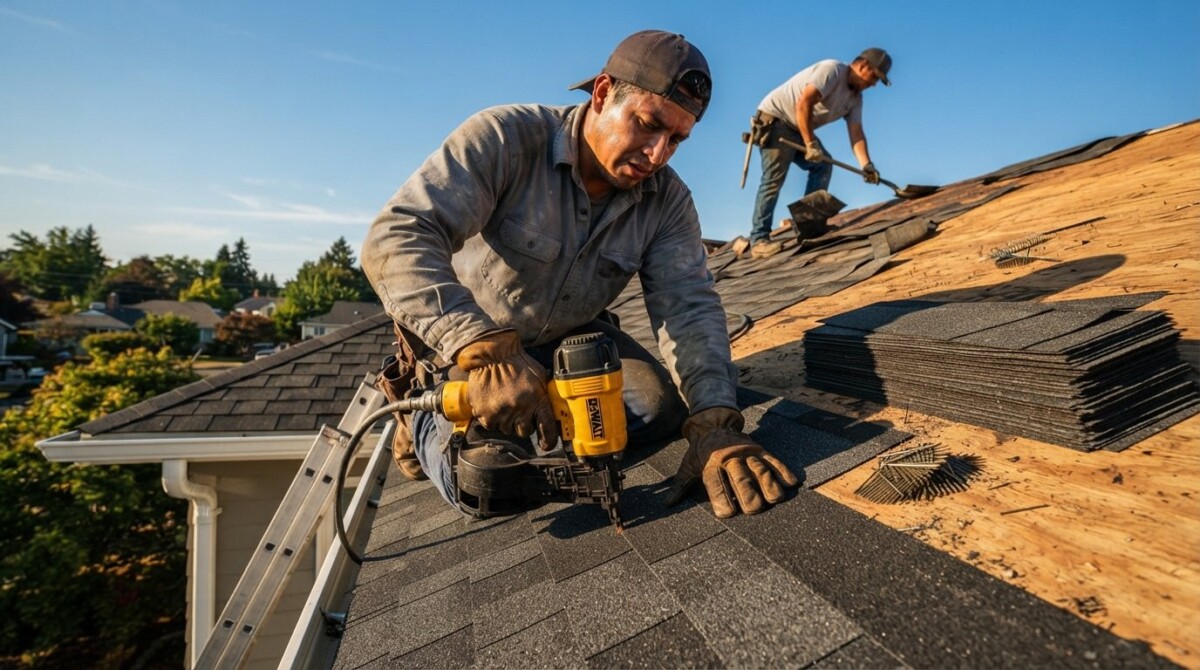
- Tear-off: Workers remove the old shingles, underlayment, flashing, and any damaged decking. They haul away the debris and inspect the roof structure.
- Deck repair and underlayment: Rotted or damaged wood is replaced, then a synthetic underlayment or felt paper is rolled out and secured. Ice and water shield is applied to valleys and eaves.
- Flashing and shingle installation: New flashing is installed around chimneys, vents, and skylights. Shingles are nailed in courses from the bottom up, with proper overlap and nail placement.
- Ventilation and ridge caps: Ridge vents are installed along the peak to allow hot air to escape, and cap shingles complete the ridge line.
- Final cleanup and inspection: The crew removes all debris, magnets are used to pick up stray nails, and a final walkthrough ensures everything meets code and quality standards.
Depending on the size of your roof and the weather, a typical replacement takes one to three days. Be wary of contractors who rush the job or ask for full payment upfront. A reputable roofer will provide a written contract that includes the scope of work, material details, warranty information, and a payment schedule tied to milestones.
Cost Factors and Budgeting for Your New Roof
Roof replacement costs vary widely based on home size, pitch, material, labor rates in your region, and the complexity of the roof design. As of 2026, the national average for an asphalt shingle roof replacement ranges from $8,000 to $25,000, with most homeowners spending around $15,000. Metal roofs can run from $20,000 to $50,000 or more. These figures include tear-off, disposal, underlayment, flashing, and basic ventilation upgrades. However, you should budget an additional 10 to 20 percent for unexpected deck repairs, which are common once old layers are removed.
To avoid surprise bills, ask for a detailed line-item estimate that breaks down material costs, labor, disposal fees, permits, and any optional upgrades. Roofers may offer financing options, and many states provide incentives for energy-efficient materials like cool roofs or solar-ready systems. If you have insurance, storm damage may be covered, but be prepared for your insurer to send an adjuster and possibly a public adjuster if you disagree with the settlement. Remember that the cheapest bid is not always the best value; an unusually low estimate often signals inferior materials or inexperienced labor, which can cost you more in repairs down the road.
Hiring the Right Contractor
The success of your roof installation or replacement hinges on the contractor you choose. Start by asking for recommendations from friends, neighbors, and online review platforms. Verify that any contractor you consider is licensed, bonded, and insured, and that they carry workers’ compensation for their crew. Ask for proof of insurance and call the provider to confirm coverage. Check their status with the Better Business Bureau and your local building department for any complaints or unresolved violations. A reputable roofer will offer a written warranty that covers both materials (from the manufacturer) and workmanship (from the contractor), typically for at least 10 years.
During the estimate process, ask pointed questions about their approach to ventilation, deck repair, and flashing details. Inquire about their policy for handling unexpected damage, how they protect your property during the job, and whether they will pull the necessary permits. A contractor who is vague about these details may not be the right fit. You should also request local references and, if possible, visit a recent job site to see the quality of their work firsthand. For tips on vetting contractors in other trades, our article on tile installation and replacement offers similar guidance on due diligence.
Financing Your Roof Project
Given the high cost of a new roof, many homeowners need financing options. Cash is always the simplest, but if you do not have savings set aside, consider a home equity loan or line of credit, which often offers lower interest rates than personal loans. Some roofing companies partner with lenders to provide promotional financing, such as zero percent APR for 12 months, but read the fine print to avoid deferred interest penalties. If you are replacing a roof due to storm damage, your homeowner’s insurance may cover the cost minus your deductible, and some states have laws prohibiting contractors from waiving deductibles, so be wary of any deal that seems too good.
Another growing option is energy-efficiency financing, especially if you choose a cool roof, solar shingles, or additional insulation. Programs like PACE (Property Assessed Clean Energy) allow you to finance improvements through your property tax bill, spreading the cost over many years. However, always compare the total cost of financing to your long-term budget, and never rush into a loan without understanding the terms. A new roof is an investment in your home’s value, but it should not become a financial burden.
Homeowner vs. Contractor: The Lead Generation Angle
For homeowners, finding a trustworthy roofer is often the hardest part of the process. This is where lead generation platforms like HomeRemodelingLeads step in to bridge the gap. HomeRemodelingLeads connects homeowners with pre-qualified, high-intent roofing contractors who are actively seeking work in their area. Instead of cold-calling random companies or relying on door-to-door salespeople, you can receive vetted leads from professionals who have already expressed interest in your project. This saves time and reduces the risk of hiring an unlicensed operator.
Contractors, on the other hand, benefit from a steady stream of qualified leads without spending countless hours on marketing. HomeRemodelingLeads provides detailed project information, including property type, scope of work, and timeline, so you can bid accurately and focus your energy on jobs you are likely to win. The platform also offers resources on lead pricing and service areas, helping you scale your roofing business efficiently. Whether you are a homeowner seeking a reliable contractor or a roofer looking to grow your client base, a lead generation service can streamline the process.
Industry Resources for Contractors
If you are a roofing professional, staying informed about industry trends and best practices is vital. The National Roofing Contractors Association (NRCA) offers certification programs, safety guidelines, and technical bulletins. The Roofing Contractors Association of your state or region can provide local networking opportunities and advocacy. Additionally, manufacturers like GAF, Owens Corning, and CertainTeed host training sessions and certify contractors who meet their standards. These credentials not only improve your skills but also serve as a marketing point when bidding on jobs.
Digital marketing is equally important in today’s competitive environment. A professional website, positive online reviews, and a presence on lead generation platforms like HomeRemodelingLeads can make the difference between a busy season and a slow one. When you purchase leads from a reputable source, you know the homeowner is actively looking for services, which increases your conversion rate. Pair this with excellent customer service and transparent pricing, and you will build a reputation that generates referrals and repeat business.
Making the Final Decision: Installation or Replacement
When you stand in front of your home and look at the roof, the decision between installation and replacement may already be clear. If you are adding a new wing to your house, installation is the only option. If your existing roof is failing, replacement is the logical choice. In both cases, the key is to act decisively and invest in quality. Delaying a necessary replacement often leads to water damage, mold, and higher repair costs, not to mention the stress of an emergency leak in the middle of a storm. By planning ahead, setting a realistic budget, and hiring a vetted professional, you can protect your home and enjoy peace of mind for decades.
Whether you are a homeowner starting this journey or a contractor looking to expand your business, resources like HomeRemodelingLeads can support you every step of the way. For homeowners, the platform takes the guesswork out of finding a reliable roofer. For contractors, it provides the leads needed to grow revenue. The road to a sturdy, beautiful roof does not have to be complicated. With the right information and the right partners, you can ensure your home remains safe, comfortable, and valuable for years to come.
About the Author: Mason Caldwell