Roofing Lead Acquisition for Storm and Replacement Work
Master roofing lead acquisition for storm and replacement work with dual-track strategies. Call (510)-663-7016 to start acquiring higher-margin roofing jobs.

By Nathan Adler
When a hailstorm rolls through a neighborhood, the phone should ring. When a homeowner decides their aging asphalt shingle roof finally needs a full tear-off, the estimate request should land in your inbox before a competitor even knocks on the door. That is the promise of roofing lead acquisition for storm and replacement work, and it is also where most contractors either build a predictable pipeline or burn cash on low-intent clicks. The difference usually comes down to how clearly you separate storm-driven insurance claim leads from planned retail replacement leads, and how well your intake process matches the scope of each job.
Roofing is not a single market. A homeowner filing a claim after a wind event behaves very differently from a homeowner comparing three bids for a planned metal roof upgrade. Storm leads move fast, involve adjusters, and often require immediate documentation. Replacement leads move slower, involve financing conversations, and hinge on trust and timing. Treating both through the same funnel is one of the most common reasons contractors see inconsistent close rates. The strategies below show how to build a dual-track acquisition system that respects those differences while keeping your crews busy year-round.
Separate Storm and Insurance Claim Leads From Planned Replacement Leads
The first structural decision in any roofing lead acquisition plan is pipeline segmentation. Storm and insurance claim leads arrive with urgency baked in. The homeowner has visible damage, may have already filed a claim, and is often working against a deadline tied to their policy or mortgage. Planned replacement leads, by contrast, are frequently triggered by age, appearance, or a home sale. They need education, financing options, and sometimes months of nurturing before they convert.
Mixing these two lead types into one CRM stage causes two expensive problems. Your sales team either rushes planned replacement prospects (damaging trust) or moves too slowly on storm prospects (losing them to faster competitors). The fix is to tag every incoming lead at the source with a simple label such as STORM-CLAIM or PLANNED-REPLACE, then route them to different follow-up sequences. Storm leads should get a call within minutes and an inspection scheduled within 24 to 48 hours. Planned replacement leads can enter a longer nurture track with educational content about materials, warranties, and financing.
A practical way to keep this organized is to define clear intake criteria for each track before you buy or generate a single lead. For storm and claim work, the criteria might include confirmed storm date, visible damage type, insurance carrier, and claim status. For replacement work, the criteria might include roof age, home value range, material preference, and budget readiness. When you evaluate lead sources through HomeRemodelingLeads, you can match these criteria against the roofing lead categories available, which helps you avoid paying for prospects who do not fit either track.
Segmentation also improves your marketing message. Storm-focused ads and landing pages should speak to urgency, insurance paperwork, and fast inspections. Replacement-focused ads should speak to curb appeal, energy efficiency, and long-term value. When the message matches the lead type, conversion rates rise and your cost per acquired job drops.
How Roof Type Affects Scope, Estimate Time, and Lead Quality
Roof type is not a minor detail in lead acquisition. It directly influences the scope of work, the time required to produce an accurate estimate, and the type of homeowner you are dealing with. Asphalt shingle roofs, for example, are the most common residential roofing material in North America. They are relatively fast to inspect and estimate, and most homeowners understand the replacement process. Metal roofing, by contrast, involves different fastening systems, panel profiles, and sometimes structural considerations that require a more detailed site evaluation.
When you acquire roofing leads, ask yourself whether the source provides enough information to distinguish between these roof types. A lead that simply says "roof replacement needed" is far less valuable than one that specifies asphalt shingle, metal, tile, or flat membrane. The more detail you have before the first call, the better you can prepare the right estimator and the right material samples. This is especially important for storm work, where the insurance adjuster will scrutinize the scope and you need your estimate to align with the carrier's assessment.
Estimate time also varies by roof type and complexity. A simple asphalt shingle replacement on a single-story ranch might take 30 to 45 minutes to measure and quote. A metal roof with multiple valleys, skylights, and a steep pitch could take two hours or more, plus a follow-up visit. If your sales team is working a high volume of storm leads, routing only straightforward shingle jobs to junior estimators and reserving complex metal or tile jobs for senior staff keeps throughput high without sacrificing accuracy.
Lead quality signals to watch for include the following:
- Explicit roof material mentioned by the homeowner (asphalt shingle, metal, tile, flat).
- Roof age or approximate year of last replacement.
- Presence of visible damage such as missing shingles, granules in gutters, or ceiling stains.
- Insurance claim status (not filed, filed, approved, denied).
- Homeowner timeline (emergency, within 30 days, within 6 months, just researching).
These signals help you score leads before you spend time on them. A storm lead with confirmed damage, an active claim, and a shingle roof is a high-priority contact. A replacement lead with no timeline and no material preference belongs in a nurture sequence, not a same-day call list.
Prepare Inspection and Documentation Workflows for Claim-Supported Jobs
Insurance claim roofing jobs live or die on documentation. The homeowner may be stressed, the adjuster may be difficult to reach, and the scope of damage may be disputed. Your inspection and documentation workflow needs to be standardized so that every claim-supported job moves through the same checkpoints. This reduces errors, speeds up approvals, and protects your margin.
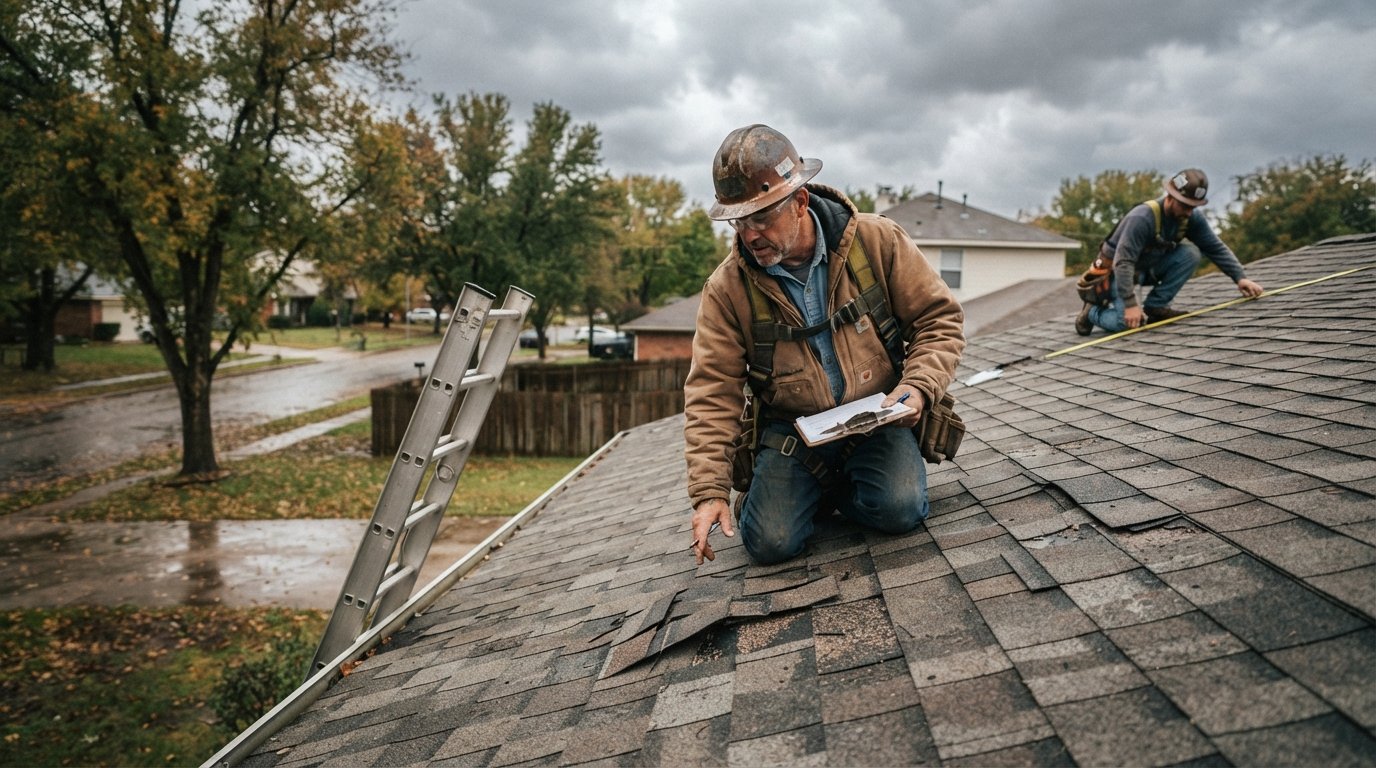
The first step is a thorough inspection that goes beyond a quick visual scan. For storm claims, you want dated photos of all elevations, close-ups of damaged areas, and a written narrative that connects the damage to the storm event. If the homeowner has already filed a claim, collect the claim number, adjuster name, and any correspondence. If they have not filed, your inspection report can become the basis for their claim submission. In either case, the documentation should be organized in a digital folder that your office team, the homeowner, and the adjuster can all reference.
A repeatable claim workflow might look like this:
- Initial phone screening to confirm storm date, damage type, and insurance carrier.
- On-site inspection with photo documentation and moisture testing where relevant.
- Written estimate aligned with carrier scope categories (labor, materials, disposal, permits).
- Homeowner review and signature on a contingency or authorization form.
- Adjuster meeting or documentation submission, followed by supplement tracking.
Each step should have a clear owner and a target completion time. When the workflow is standardized, you can train new team members quickly and maintain consistency even during peak storm season. It also makes it easier to identify bottlenecks, such as slow adjuster responses or missing homeowner signatures, and address them before they delay the job.
Documentation quality also affects your ability to get supplements approved. If your initial estimate misses items like drip edge, ice and water shield, or ridge vent, you may need to file a supplement later. A thorough inspection and a checklist-based estimating process reduce the need for supplements and keep the project moving. For contractors using HomeRemodelingLeads, the platform's roofing lead categories can be paired with your own documentation checklist so that every claim job starts with the same information.
Handle Homeowners Who Are Also Getting Unsolicited Canvasser Quotes
After a major storm, homeowners are often inundated with door-knocking canvassers, flyers, and unsolicited quotes. Some of these offers are legitimate, but many are high-pressure or low-quality. Your job is not to criticize the competition but to position yourself as the professional, transparent option that the homeowner can trust. That positioning starts with how you handle the first conversation.
When a homeowner mentions that they have already received quotes from canvassers, do not dismiss those quotes outright. Instead, ask questions that help the homeowner compare apples to apples. What is included in the scope? Are permits and disposal covered? Is the contractor licensed and insured in your state? Will they handle the insurance paperwork or leave it to the homeowner? These questions naturally highlight the value of a professional roofing contractor who manages the entire process.
It also helps to have a simple comparison framework you can walk through with the homeowner. For example, you might explain the difference between a retail estimate and an insurance-scope estimate, or between a full tear-off and an overlay. Homeowners who understand these distinctions are better equipped to recognize when a low quote is missing critical items. Your role is to educate, not to sell against the other contractor.
Speed and follow-up matter here as well. Canvassers often move quickly, so your response time should be competitive. If a homeowner requests an inspection, schedule it within 24 hours if possible. Send a confirmation text with your license number and a link to your reviews. After the inspection, provide a written estimate within 48 hours, and follow up with a phone call to answer questions. The contractor who is responsive, transparent, and organized usually wins the job, even against a lower bid.
Track Which Lead Sources Produce the Highest-Margin Roofing Jobs
Not all roofing leads are created equal, and not all lead sources produce the same margin. A storm claim lead that converts into a full replacement with supplements may yield a healthy profit, while a low-intent replacement lead that requires months of nurturing may not be worth the cost. To build a sustainable acquisition system, you need to track margin by lead source, not just conversion rate.
Start by defining the metrics that matter for your business. Cost per lead is a starting point, but it is not enough. You also need cost per inspection, cost per signed contract, average job value, and gross margin after materials, labor, and overhead. When you track these metrics by source, you can see which sources are actually profitable and which are merely generating activity.
A simple tracking framework might include the following columns in your CRM or spreadsheet:
- Lead source (platform, referral, canvass, SEO, paid ads).
- Lead type (storm-claim, planned-replace).
- Roof type and scope (shingle, metal, tile, flat).
- Inspection date and outcome.
- Contract signed, job value, and gross margin.
Review this data monthly and quarterly. You may find that storm-claim leads from one source close at a higher rate but require more documentation time, while replacement leads from another source have a longer sales cycle but higher average job value. Use these insights to allocate your budget toward the sources that produce the best combination of volume, close rate, and margin.
For contractors who want a reliable source of pre-qualified roofing leads, platforms like HomeRemodelingLeads offer exclusive and shared options across roofing, windows, bathroom remodeling, solar, flooring, and HVAC. The roofing category includes asphalt shingle, metal roofing, and gutter installation, which aligns well with the dual-track approach described above. You can also explore real-time lead distribution and auction platforms such as PingPost.Exchange to compare how dynamic pricing and ping/post technology fit into your overall acquisition mix.
To go deeper on building a repeatable acquisition system, our guide on roofing lead acquisition strategy for contractors walks through the foundational steps that support storm and replacement work alike.
Roofing lead acquisition for storm and replacement work is ultimately about matching the right lead to the right process at the right time. Storm claims demand speed, documentation, and insurance expertise. Planned replacements demand education, financing options, and patience. When you separate the two tracks, prepare your inspection and documentation workflows, and track margin by source, you build a pipeline that performs in every season. The contractors who master this dual approach are the ones who stay busy long after the storm clouds clear.