
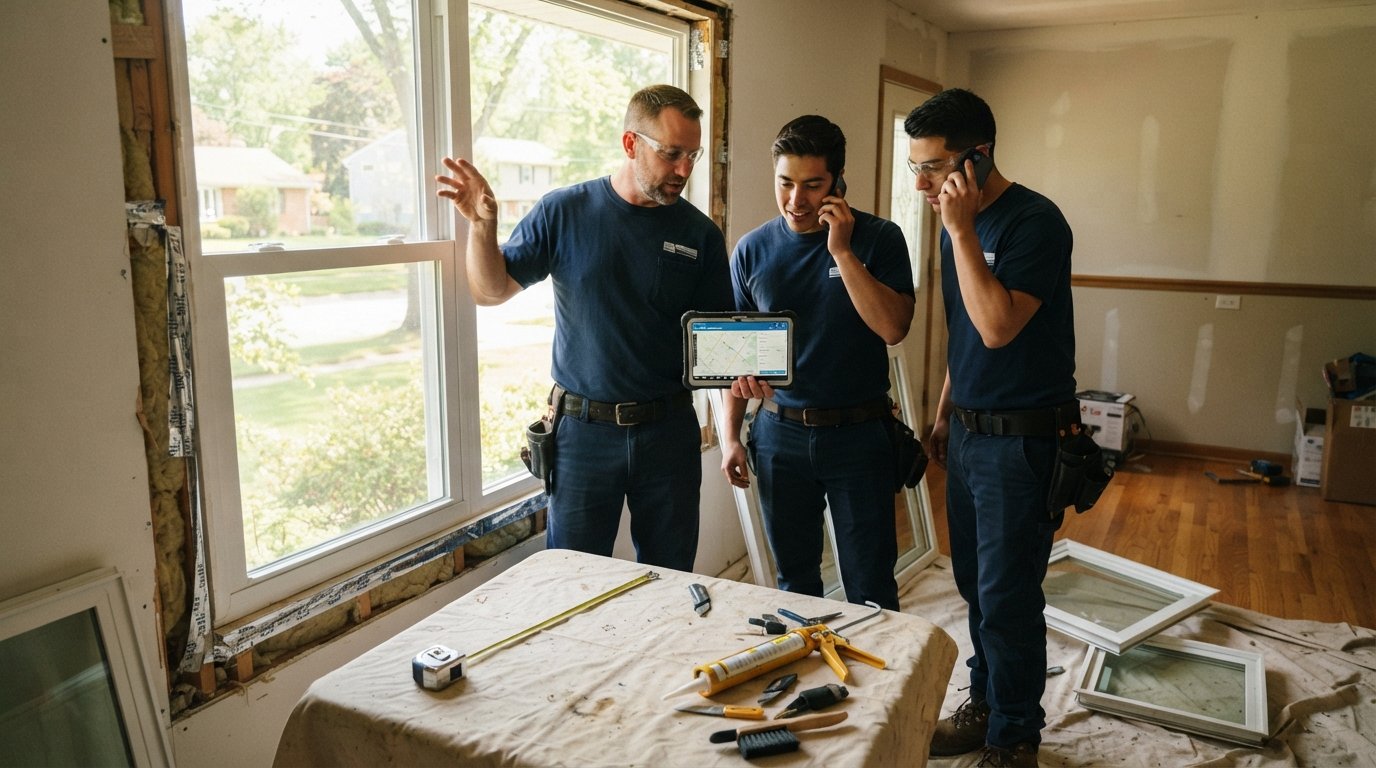
Window Replacement Lead Conversion Tips for Installers
Boost your closing rate with these window replacement lead conversion tips for installers. Call 5106637016 to scale your business today.

The window replacement market is competitive, and the cost of acquiring a lead is only the beginning of your investment. If your team is buying pre-qualified window leads but failing to turn them into signed contracts, you are burning marketing budget and leaving revenue on the table. High-intent homeowners are ready to buy, but they are also bombarded with options. To win, installers must move beyond simply answering the phone and start engineering a conversion process that builds trust, demonstrates value, and eliminates friction. Whether you are sourcing leads through a specialized platform or generating them internally, the difference between a break-even month and a record-breaking quarter often comes down to the speed and structure of your follow-up.
Speed to Lead: The First Five Minutes Determine the Win
In the window replacement industry, the first company to make meaningful contact with a homeowner usually wins the job. When a homeowner submits a request for a quote, they are in the market for a solution, not just a price. If your team takes hours to respond, that homeowner has likely already spoken to two or three competitors. The window for opportunity slams shut quickly. You must treat every new lead as a perishable item that loses value by the minute.
Implementing a speed-to-lead protocol is not just about having a receptionist ready. It requires an automated system that ensures no lead falls through the cracks, regardless of the time of day. This is where the integration of technology and human touch becomes critical.
- Automated Acknowledgment: Send an immediate SMS and email confirming receipt of the inquiry. This buys you time and keeps your brand top-of-mind.
- Live Transfer Priority: If you buy exclusive leads, ensure your sales floor is staffed to handle them immediately. A live conversation is ten times more effective than a voicemail.
- Multi-Channel Outreach: If the homeowner does not answer the phone, follow up with a text message within 60 seconds. Many homeowners prefer to text before committing to a call.
- After-Hours Coverage: Leads do not stop coming at 5 PM. Use a virtual receptionist or an answering service that can qualify the lead and schedule an appointment, rather than just taking a message.
Data from improving lead conversion rates shows that contacting a lead within the first five minutes makes you up to 100 times more likely to connect than if you wait 30 minutes. For window installers, where the average ticket price is high, this speed is the single most profitable metric you can optimize. Do not let your competitors beat you to the punch simply because you were slower to dial.
Qualifying for Fit: Not Every Lead is Your Customer
One of the biggest mistakes installers make is trying to sell every lead they receive. While it is tempting to chase every potential job, attempting to convert leads that are outside your service area, budget range, or project scope drains your resources and demoralizes your sales team. Effective conversion starts with effective disqualification. You need to quickly determine if the homeowner is a fit for your specific business model.
When you purchase leads from a platform like HomeRemodelingLeads, you have access to specific data points that can help you prioritize. For example, knowing the difference between a homeowner looking for a single window repair versus a full-house replacement allows you to route the lead to the right salesperson or script. If you offer premium products, you need to identify homeowners who are looking for energy efficiency and aesthetic upgrades, not just the cheapest fix.
Create a qualification checklist that your setters or sales reps use on the first call. This checklist should cover the project timeline, the budget expectations, and the decision-making process.
- Timeline: Are they looking to buy this week, this month, or just doing research for next year? Immediate needs require a different approach than future planning.
- Budget: Have they discussed a budget range? If they are expecting a $500 fix for a $10,000 problem, you need to reset expectations or disqualify them early.
- Scope: Is it a single window or a whole-home replacement? This determines the material cost and labor time.
- Decision Makers: Are both homeowners present for the consultation? If not, you may be presenting to a gatekeeper who cannot sign the contract.
By filtering out the noise, you allow your sales team to focus their energy on the leads that have the highest probability of closing. This increases your overall conversion rate and reduces the cost per acquisition.
Building Instant Trust: The Power of Social Proof
Homeowners are inherently skeptical of contractors. They have heard horror stories about unfinished projects, hidden fees, and unprofessional behavior. When you call a lead, you are starting from a deficit of trust. You must immediately overcome this barrier by providing social proof. You are not just selling windows; you are selling peace of mind and security.
Before your sales rep even calls, your digital footprint should be doing the work. A homeowner will Google your company name before they answer the phone. If they see a professional website, recent reviews, and a portfolio of local work, they are far more likely to engage. During the call, your rep should reference this social proof.
For instance, instead of saying "We do window replacement," say "We just finished a project in your neighborhood at [Street Name], and the homeowner was thrilled with the noise reduction." Localized trust signals are incredibly powerful. If you are buying shared leads, you must differentiate yourself immediately. Mentioning that you are a local, vetted business that stands behind its work can be the deciding factor.
Additionally, be transparent about the process. Explain the steps clearly: the in-home consultation, the measurement, the ordering process, and the installation timeline. Homeowners appreciate a company that has a defined system because it signals competence and reliability. If you are financing options, such as those offered by partners like MortgageLeads, mention this early. Knowing that they can afford the upgrade without a large upfront cash outlay can turn a hesitant lead into a ready buyer.
Mastering the In-Home Consultation
The in-home consultation is where the sale is won or lost. It is not a time to simply measure windows and drop off a quote. It is a performance. You are competing against other installers who are likely offering similar products at similar prices. Your differentiator is the experience you provide and the confidence you instill.
Start the appointment on time and come prepared. A disorganized sales rep who cannot find a business card or a brochure creates a poor first impression. Use a tablet or laptop to show visuals, warranties, and financing options. This makes your presentation modern and engaging. Rather than talking at the homeowner, engage them in a conversation about their goals. Do they want to lower energy bills? Reduce outside noise? Improve curb appeal? Tailor your presentation to their specific pain points.
When it comes time to discuss price, do not just hand over a number. Build the value first. Explain the quality of the materials, the warranty coverage, and the expertise of your installation crew. If the homeowner sees the value, the price becomes secondary. If they object to the price, do not immediately drop your rates. Instead, ask questions to understand the objection. Sometimes, it is not about the total cost, but the monthly payment or the timing. Having flexible financing options available can often bridge the gap.
Financing: Removing the Financial Roadblock
One of the most common objections in window replacement is cost. Homeowners often experience sticker shock when they realize that replacing windows is a significant investment. If you cannot offer financing, you are leaving money on the table. Many homeowners have the credit and the desire to upgrade, but they lack the liquid cash for a full project.
Providing financing options transforms your offer from a daunting expense into a manageable monthly payment. This is particularly important for younger homeowners who are used to subscription models and financing for major purchases. When you integrate financing into your sales pitch, you remove the primary barrier to conversion.
To make this work, you need a reliable financing partner. You should be able to offer a variety of programs, including zero-down options and low-interest rates. The application process should be quick and easy, ideally done on a tablet during the consultation. If the homeowner is approved, you can close the deal on the spot. If you need to connect them with lending resources, ensure the process is seamless. You can learn more about how lending leads are generated and how they can support your sales process by visiting MortgageLeads.
Follow-Up: The Fortune is in the Persistence
Most sales are not made on the first visit. They are made after the third or fourth follow-up. Life gets in the way; homeowners get busy, and they need time to discuss the decision. Unfortunately, many installers give up after one or two attempts. If you want to maximize your window replacement lead conversion, you must have a relentless follow-up system.
Your follow-up should be a mix of channels: phone calls, emails, text messages, and even direct mail. Each touchpoint should provide additional value or a different angle. Do not just call and ask, "Did you make a decision?" Instead, send an email with a testimonial from a satisfied customer, or a text with a reminder about a current promotion.
- Day 1: Thank you call and recap of the visit.
- Day 3: Email with a link to your online reviews or a recent project gallery.
- Day 7: Phone call to answer any new questions.
- Day 14: Text message with a limited-time financing offer.
- Day 30: Final check-in to see if the project is still on their mind.
It is also helpful to categorize your leads. Some are hot and ready to buy now. Others are warm and need nurturing. Do not treat a warm lead like a cold one, but do not let them cool down completely. By maintaining consistent contact, you stay top-of-mind when they are finally ready to pull the trigger.
Leveraging Data to Refine Your Process
To truly optimize your conversion rates, you must track your metrics. If you do not know your numbers, you cannot improve them. You need to know your cost per lead, your cost per appointment, your closing rate, and your average ticket price. These numbers tell you where your bottlenecks are. For example, if you have a high rate of leads but a low rate of appointments set, your phone script or speed to lead might be the issue. If you have a high rate of appointments but a low closing rate, your sales presentation or pricing might need adjustment.
Regularly review your sales data with your team. Celebrate the wins and analyze the losses. If you are buying leads from a platform like HomeRemodelingLeads, use the data to determine which lead types are most profitable for you. Maybe you convert better on "Full Frame" replacement leads than "Window Cleaning" leads. If so, adjust your budget to focus on the higher-converting categories. Continuous improvement is the key to long-term success in the competitive window replacement market.
By focusing on speed, qualification, trust, and relentless follow-up, you can turn your lead investment into a predictable revenue stream. The market is there; it is up to you to convert it.