
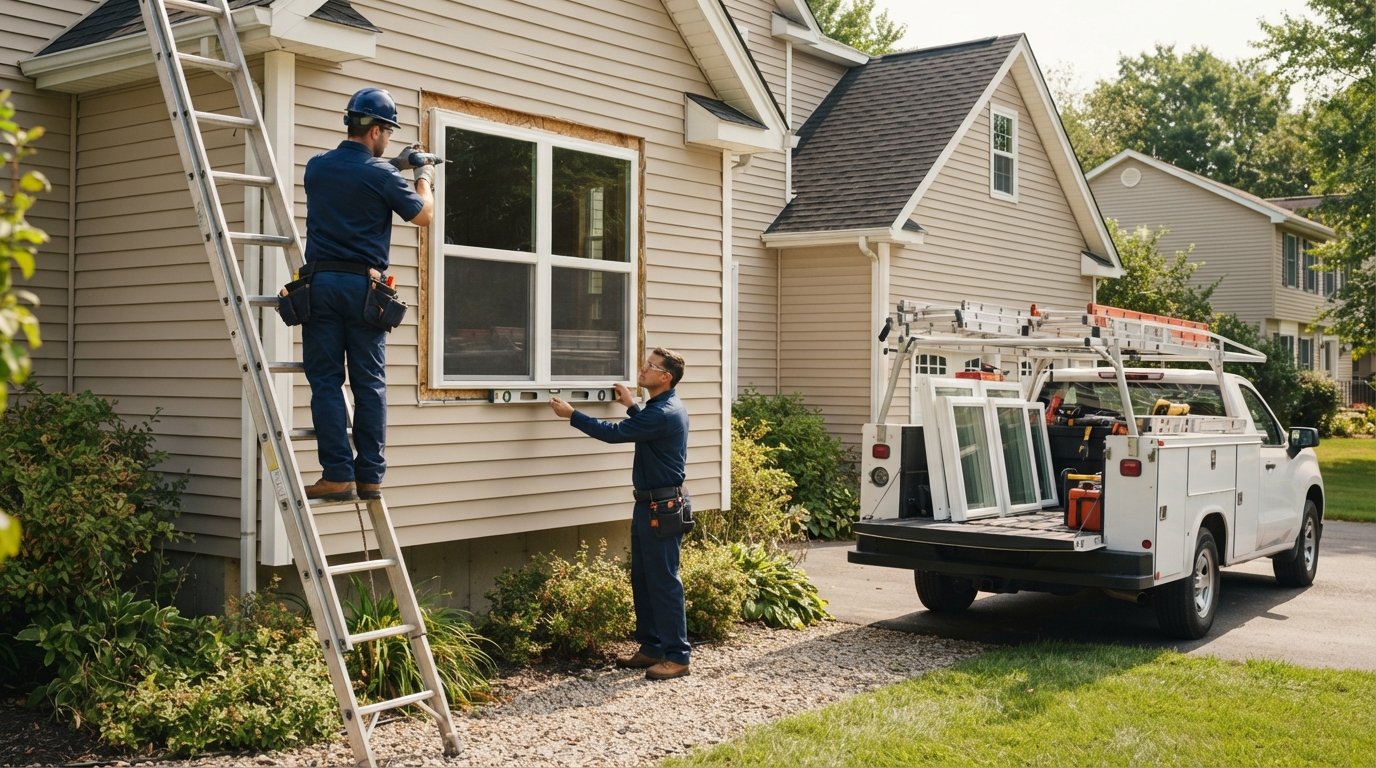
Window Replacement Lead Generation for Installers: A 2026 Playbook
Window replacement lead generation for installers starts with the right pipeline. Call (510)-663-7016 to build a system that fills your calendar.

By Julia Ellis
Window replacement is one of the most competitive segments in home improvement, and the installers who win are not always the best craftsmen. They are the ones with a reliable pipeline of homeowners who are ready to talk about new windows. If your phone goes quiet for a week, you already know the pain: crews sit idle, marketing spend feels wasted, and every estimate becomes a must-win. Window replacement lead generation for installers is the discipline of attracting, qualifying, and converting homeowners who need single windows, whole-house replacements, or storm-damage repairs. This guide breaks down the lead types you will encounter, the motivations behind each inquiry, a first-call script that saves hours, pricing strategies that protect your margin, and how to blend exclusive and shared leads into a steady calendar.
Understand the Three Window Lead Types Before You Buy
Not all window leads are created equal. The homeowner searching for one foggy pane in a bathroom has a very different budget and urgency than the homeowner replacing 14 windows before selling a house. If you treat every lead the same, you will either over-invest in small jobs or under-serve the big ones. The first step in any window replacement lead generation for installers strategy is segmentation, because your follow-up, pricing, and close rate all depend on which bucket the lead falls into.
The three core categories are single-window replacements, multi-window or whole-home replacements, and cleaning or small-service jobs. Each has a distinct economic profile. Single-window leads typically convert faster but carry lower ticket averages, so they work best when you can bundle them with other services or use them to fill gaps between larger projects. Multi-window leads require more nurturing and a more detailed presentation, but they produce the revenue that keeps a crew busy for days. Cleaning and small-service requests are often overlooked, yet they can be a goldmine for building trust and generating referrals if you handle them with the same professionalism as a full replacement.
- Single window: One failed seal, a cracked pane, or a drafty bedroom window. Fast decision, lower ticket, high volume.
- Multiple windows: Whole-house replacement, energy-efficiency upgrade, or pre-sale renovation. Longer sales cycle, higher revenue, more competition.
- Cleaning or small jobs: Window cleaning, screen repair, or hardware replacement. Low ticket but strong relationship-building potential.
When you understand these categories, you can set different expectations for your sales team. A single-window lead might be handled entirely over the phone with a quick measurement and a fixed quote. A multi-window lead deserves an in-home consultation, a demonstration of glass packages, and a financing conversation. Cleaning leads should be routed to a technician who can upsell a full inspection and leave a branded report behind. The key is to match your process to the lead type rather than forcing every homeowner through the same funnel.
Match Your Pitch to Homeowner Motivation
Homeowners replace windows for three main reasons: energy efficiency, curb appeal, and storm or damage replacement. Each motivation changes the conversation. An energy-focused homeowner cares about U-values, low-E coatings, and utility bill savings. A curb-appeal buyer is thinking about resale value, color, and frame style. A storm-damage lead is often urgent, insurance-driven, and price-sensitive in a different way. If your first call ignores these drivers, you will sound like every other installer who reads from a generic script.
Energy-efficiency leads are the most common in window replacement lead generation for installers because utility costs keep rising. These homeowners have usually done some research. They may mention drafty rooms, condensation between panes, or high heating bills. Your job is to validate their concern and translate technical specs into monthly savings. Instead of rattling off numbers, ask what they noticed last winter. Then explain how a specific glass package solves that exact problem. Curb-appeal leads respond to visualization. They want to see how new windows change the look of their home. Bring photos of similar houses, offer frame color samples, and talk about resale. Storm-damage leads need empathy and speed. They may be dealing with an insurance claim, so your ability to provide documentation and work with adjusters is a major differentiator.
There is also a fourth, quieter motivation: noise reduction. Homeowners near busy roads or airports will pay a premium for laminated glass and tight installation. This group is often underserved because they do not fit the standard energy or curb-appeal pitch. If you can identify them early, you can position yourself as a specialist and avoid competing on price alone. The same goes for homeowners with young children or pets, who care about safety glass and easy-clean features. The more precisely you match your pitch to the motivation, the less you have to discount.
The First-Call Script That Qualifies in Five Minutes
Speed to lead is everything in window replacement lead generation for installers. The first five minutes after a lead comes in determine whether you book an appointment or lose the homeowner to a competitor. But speed without structure is just noise. You need a first-call script that qualifies scope, timeline, and budget without sounding like an interrogation. The goal is not to close the sale on the phone; it is to confirm that the homeowner is worth an in-person visit and to set the agenda for that visit.
Start with a warm introduction and a permission-based question. For example: "Hi, this is Mike from ABC Windows. You requested a quote for window replacement. Do you have two minutes so I can ask a few quick questions and get you the right information?" This respects their time and immediately positions you as a professional. Then move into the qualification sequence. Ask how many windows they are considering, whether any are broken or just outdated, and what prompted them to look now. Listen for timeline cues: "We are hoping to do this before winter" is very different from "We are just starting to think about it." Finally, ask about budget range without being pushy. You can say, "Most homeowners in your situation invest between X and Y. Does that align with what you had in mind?" If the answer is no, you have saved yourself a wasted trip.
- Confirm the request: Reference the specific window or windows they inquired about.
- Qualify scope: How many windows, what type, and are there any urgent issues like leaks or broken glass?
- Uncover timeline: Are they ready to hire now, within 30 days, or just exploring?
- Check budget fit: Gently confirm a realistic investment range before scheduling.
- Book the next step: Offer two specific appointment times and confirm the address.
After the call, send a confirmation text with your name, the appointment time, and a link to your company profile. This small step reduces no-shows and reinforces that you are organized. If the lead came from a shared source, note that in your CRM so you can prioritize follow-up. The best installers treat every first call as a mini-consultation, not a gatekeeping exercise. That mindset alone can double your appointment-to-estimate conversion rate.
Price Multi-Window Packages Without Giving Away Margin
Multi-window projects are where installers make their money, but they are also where discount pressure is highest. Homeowners who are replacing eight, ten, or fifteen windows will almost always ask for a volume discount. If you cave immediately, you train them to negotiate every line item and you erode the perceived value of your work. The better approach is to build packages that make the discount feel earned and tied to a specific configuration, not a desperate attempt to win the job.
Start by anchoring on value, not price. Present three tiers: good, better, and best. The good tier meets basic code and energy requirements. The better tier includes upgraded glass, better warranties, and improved frames. The best tier adds premium hardware, noise reduction, and smart-home integration. Most homeowners choose the middle option, which protects your margin while still giving them a sense of choice. When they ask for a discount, you can offer a package upgrade instead of a price cut, such as free installation of a sliding door or a complimentary window cleaning after the job. This preserves your revenue and adds tangible value.
Another effective tactic is to price per window but show the total project cost. Homeowners often fixate on the per-window price, not realizing that installation, trim, flashing, and disposal are included. Break down the estimate so they see exactly what they are paying for. If they still push for a lower number, ask which windows they would like to remove from the scope. This forces a scope conversation rather than a price conversation. You can also offer financing, which turns a large lump sum into a manageable monthly payment. Many homeowners will accept a higher total price if the monthly number fits their budget.
Finally, never discount without a reason. If you offer a promotion, tie it to a specific deadline or a specific package. "If you sign by Friday, I can include the upgraded screens at no charge" is a reason. "I will take 10 percent off" is not. The first protects your value; the second tells the homeowner that your original price was inflated. In window replacement lead generation for installers, the goal is not to win every bid. It is to win the right bids at a price that keeps your business healthy.
Build a Pipeline That Blends Exclusive and Shared Leads
Every installer faces slow weeks. The phone stops ringing, the calendar has gaps, and panic sets in. The antidote is a pipeline that blends exclusive and shared window leads so you always have opportunities at different stages. Exclusive leads give you a competitive advantage because you are the only installer calling. Shared leads cost less and can fill gaps, but you must be fast and organized to win them. The smartest window replacement lead generation for installers strategies use both, with clear rules for how each type is handled.
Exclusive leads should be your priority for high-value projects. When you receive an exclusive lead, call within five minutes, ideally within two. These homeowners are not being bombarded by other contractors, so your speed and professionalism stand out. Shared leads require a different approach. Because multiple installers receive the same lead, you need to differentiate immediately. Mention a specific detail from the lead form, offer a unique guarantee, or provide a quick educational resource. The goal is to be memorable, not just fast. If you are looking for a performance-based way to supplement your pipeline, consider a platform like PayPerCallMarketing, which connects advertisers with publishers to generate high-quality phone calls. That model can work well for installers who want to pay only for qualified conversations.
To make the blend work, you need a simple tracking system. Label every lead by source and type, then measure cost per appointment and cost per closed job. Exclusive leads will have a higher upfront cost but often a better close rate. Shared leads will have a lower upfront cost but require more follow-up. Over time, you will see which mix keeps your crews busy without blowing your marketing budget. You can also use shared leads to test new scripts or offers before rolling them out to your exclusive pipeline. That way, even a lost shared lead provides valuable data.
One more tip: do not let shared leads sit in your CRM without a follow-up sequence. Many installers give up after one call. A simple three-touch sequence (call, text, email) over three days can revive leads that seemed dead. Some homeowners are simply busy when you first call, and a polite follow-up puts you at the top of their mind when they are ready. If you want a deeper framework for building this kind of system, our guide on building a contractor lead generation system walks through the exact steps.
Measure What Matters and Adjust Weekly
Window replacement lead generation for installers is not a set-it-and-forget-it activity. The market shifts, homeowner behavior changes, and your own capacity fluctuates. To stay profitable, you need to review a small set of metrics every week. The most important are lead response time, appointment set rate, estimate-to-close rate, and average job value. If response time creeps above ten minutes, your appointment rate will drop. If your close rate falls, it may be a pricing issue or a script issue. If average job value declines, you may be attracting too many single-window leads without an upsell path.
Set a weekly review meeting with your sales team, even if it is just 15 minutes. Look at the numbers, celebrate wins, and identify one thing to improve for the next week. Maybe your first-call script needs a better budget question. Maybe your multi-window presentation needs a new visual aid. Maybe you need to pause shared leads for a week and focus on exclusive ones. Small adjustments compound quickly. Installers who treat lead generation as a core business process, not a necessary evil, consistently outperform those who rely on referrals alone.
Finally, remember that every lead is a homeowner with a problem. Whether they need one window or twenty, they are looking for a trustworthy professional who will solve it. If you approach window replacement lead generation for installers with that mindset, you will not just book more jobs. You will build a reputation that makes future lead generation easier and cheaper. The installers who win in 2026 and beyond are the ones who combine craftsmanship with a disciplined, data-driven approach to finding and converting homeowners.