Smart Home Project Matching: Find the Right Pro
You have decided to turn your house into a smart home. The vision is clear: lights that respond to your voice, a thermostat that learns your schedule, cameras that watch over your property while you are away. What is not clear is who should install all of it. Smart home project matching is the process of aligning your specific upgrade goals with the right contractor, and getting it wrong can mean months of frustration, wasted money, and a system that never works the way you imagined. This guide walks you through how matching works, what to look for, and how to avoid the most common mistakes homeowners make.
Why Smart Home Project Matching Matters More Than Ever
The smart home market has exploded. According to industry estimates, millions of households now own at least one smart device, and that number continues to climb. But owning a smart speaker is very different from commissioning a whole-home automation system with integrated lighting, security, climate control, and entertainment. The complexity scales quickly, and so does the risk of hiring the wrong professional.
Traditional remodeling projects follow a familiar pattern: you hire a general contractor, they manage the trades, and the work gets done. Smart home projects do not fit neatly into that mold. They require someone who understands low-voltage wiring, network configuration, device compatibility, and the specific ecosystems that different manufacturers use. A brilliant electrician may not know how to program a Z-Wave scene controller. A talented AV installer may not understand the structural implications of running cable through finished walls.
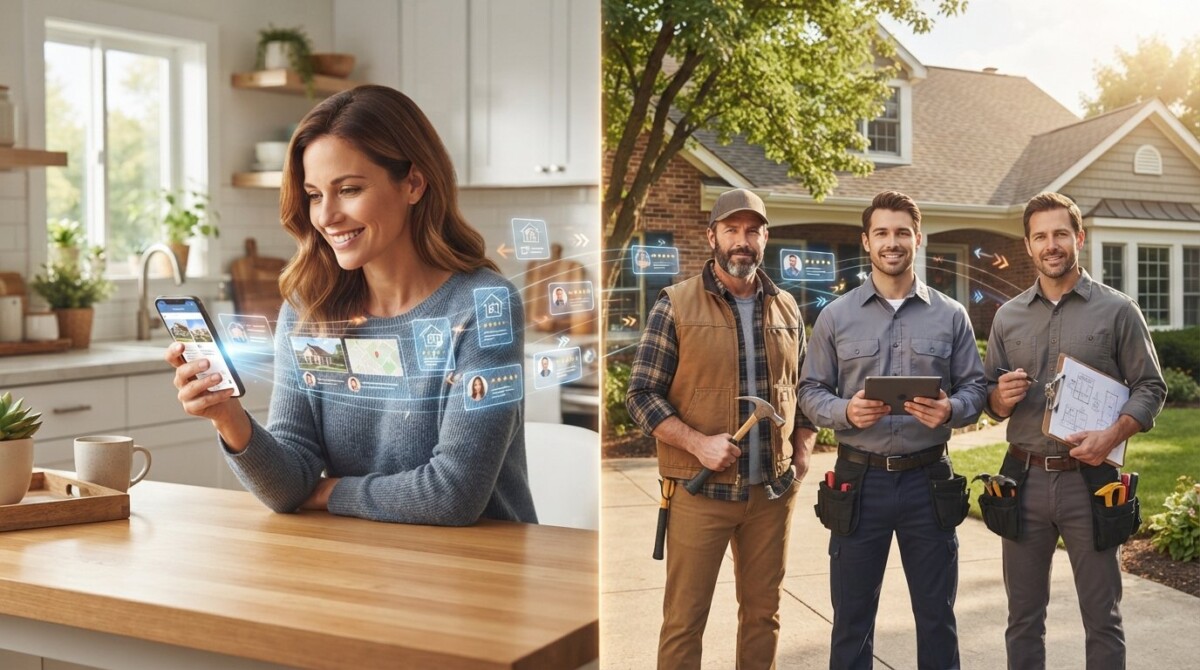
This is where smart home project matching becomes essential. Instead of calling random contractors and hoping for the best, you match your project requirements to professionals who have demonstrated expertise in exactly that type of work. The result is faster installation, fewer compatibility headaches, and a system that actually delivers on its promise.
For contractors, the flip side is equally important. Professionals who specialize in smart home installations need a steady stream of qualified leads from homeowners who are serious about upgrading. Platforms like Home Remodeling Leads exist precisely to bridge that gap, connecting high-intent customers with vetted installers who can handle the job. When you understand how matching works from both sides, you make better decisions regardless of which role you play.
How the Matching Process Works Step by Step
Smart home project matching is not a single action. It is a sequence of evaluations that narrow the field from hundreds of potential contractors to the one or two who are genuinely right for your project. Understanding each step helps you ask better questions and recognize when a match is truly good.
The process typically begins with defining your project scope. Are you installing a few smart bulbs and a video doorbell, or are you automating an entire home with centralized control? The scope determines the level of expertise required. A simple DIY-friendly setup might only need a handyman for mounting and basic wiring. A full automation system demands a specialist who has worked with the specific platforms you plan to use.
Once your scope is clear, the next step is identifying contractors who match your technical requirements and budget. Here is how a typical matching workflow unfolds:
- Define the project requirements: List the devices, platforms (Amazon Alexa, Google Home, Apple HomeKit, SmartThings), and integration goals you have in mind.
- Filter by specialty: Look for contractors who explicitly list smart home installation as a core service, not just a side offering.
- Verify credentials and experience: Check certifications such as CEDIA membership, manufacturer training badges, or smart home-specific licenses.
- Compare proposals and quotes: Request detailed estimates that break down labor, materials, and any ongoing support options.
- Confirm compatibility and warranty: Ensure the contractor stands behind the work and understands the warranty terms of the devices being installed.
Each of these steps reduces uncertainty. Skipping any one of them increases the chance of a mismatch, which often shows up as devices that do not communicate with each other, incomplete installations, or a contractor who disappears when something goes wrong. The discipline of matching pays off long before the first device is unboxed.
It is also worth noting that matching is not just about technical skill. Communication style, responsiveness, and willingness to explain complex concepts in plain language matter just as much. A contractor who installs flawlessly but never returns calls will make your smart home journey miserable. Factor personality and service quality into your evaluation alongside technical credentials.
What to Look for in a Smart Home Contractor
Not every contractor who claims to do smart home work is truly qualified. The field attracts generalists who see an opportunity but lack the depth to handle complex integrations. Knowing what separates a true specialist from a pretender saves you time and money.
Start with certifications and training. Manufacturers like Lutron, Control4, Crestron, and Savant offer partner programs that require ongoing education. A contractor who holds these certifications has demonstrated commitment to staying current with rapidly evolving technology. CEDIA (Custom Electronic Design and Installation Association) membership is another strong signal, as it indicates adherence to industry standards and ethical practices.
Experience matters, but not all experience is equal. A contractor who has installed fifty video doorbells may not be prepared to design a multi-room audio system with voice control and scene automation. Ask for examples of projects similar to yours. A good contractor will have photos, references, and stories that demonstrate relevant expertise.
Insurance and licensing are non-negotiable. Smart home installations often involve electrical work, even if it is low voltage. Verify that the contractor carries general liability insurance and any required electrical licenses for your jurisdiction. If they hesitate to provide documentation, that is a red flag.
Beyond credentials, evaluate how the contractor communicates. Do they ask thoughtful questions about your lifestyle and goals? Do they explain trade-offs between different platforms? Do they offer a clear timeline and process? These soft skills often predict project success more accurately than a long list of certifications.
Finally, consider ongoing support. Smart homes are not set-and-forget systems. Devices need firmware updates, platforms evolve, and troubleshooting is inevitable. A contractor who offers ongoing support or a maintenance plan is worth more than one who hands you a bill and vanishes. In our guide on smart home remodeling contractors, we break down the specific questions to ask before you sign a contract.
Common Mistakes Homeowners Make
Even well-intentioned homeowners stumble into pitfalls that could have been avoided with better matching. Recognizing these mistakes in advance helps you sidestep them.
The most common error is hiring based on price alone. Smart home technology is not a commodity. A low bid often means the contractor plans to cut corners, use inferior components, or rush the installation. The cheapest option frequently becomes the most expensive when you factor in repairs, replacements, and the cost of hiring someone else to fix what was done wrong.
Another frequent mistake is failing to define the project before seeking contractors. If you do not know what you want, you cannot evaluate whether a contractor is proposing the right solution. Fuzzy requirements lead to scope creep, budget overruns, and disappointment. Spend time upfront researching platforms, devices, and integration possibilities so you can speak the same language as your contractor.
Ignoring compatibility is a third trap. Different smart home ecosystems do not always play nicely together. A contractor who installs devices from multiple manufacturers without verifying interoperability is setting you up for frustration. Before work begins, confirm that all components will communicate seamlessly and that the contractor has a plan for any bridges or hubs needed.
Finally, many homeowners overlook the importance of a written contract that specifies deliverables, timelines, payment schedules, and warranty terms. Verbal agreements are worthless when disputes arise. A detailed contract protects both parties and ensures everyone shares the same expectations.
How Contractors Can Leverage Smart Home Project Matching
From the contractor perspective, smart home project matching is not just a homeowner concern. It is a business growth strategy. Contractors who position themselves as smart home specialists attract higher-value projects and build reputations that command premium rates. The challenge is finding homeowners who are ready to buy, not just browsing.
This is where lead generation platforms become invaluable. Instead of spending hours chasing cold prospects, contractors can access pre-qualified leads from homeowners who have already expressed interest in smart home upgrades. These leads come with project details, budgets, and timelines, allowing contractors to focus their energy on bids they can actually win.
Home Remodeling Leads is designed for exactly this purpose. The platform connects contractors with high-intent customers across categories including HVAC, roofing, windows, and remodeling, with smart home installations fitting naturally into several of these verticals. By purchasing leads that match their service offerings and geographic coverage, contractors can build a predictable pipeline of projects without the guesswork of traditional marketing.
When evaluating lead sources, contractors should look for platforms that offer transparency, quality filtering, and fair pricing. Leads that are sold to multiple contractors simultaneously dilute value. Exclusive or semi-exclusive leads, where only a small number of professionals receive the same opportunity, tend to convert better and justify higher prices. In our article on smart home project matching, we explore how the right leads translate into faster project acquisition and stronger client relationships.
Contractors should also invest in their own matching capabilities. That means clearly defining the types of projects they excel at, communicating those strengths in marketing materials, and being selective about which leads they pursue. A contractor who tries to be everything to everyone often ends up being nothing to anyone. Specialization attracts better matches.
Tools and Platforms That Simplify Matching
Technology has made smart home project matching easier than ever, but it has also created noise. Dozens of directories, marketplaces, and review sites claim to connect homeowners with the best contractors. Not all of them deliver on that promise.</n
When evaluating matching platforms, look for several key features. First, does the platform verify contractor credentials? A directory that lists anyone willing to pay a fee is not a matching service; it is an advertising board. Second, does it capture detailed project information from homeowners? The more data available, the better the match. Third, does it offer transparency into pricing and process? Hidden fees and unclear terms erode trust.
For homeowners, the best platforms provide educational resources alongside contractor listings. Understanding what a smart home installation entails helps you ask better questions and recognize quality when you see it. For contractors, the best platforms deliver leads that are genuinely qualified, meaning the homeowner has a real project, a realistic budget, and a timeline that aligns with your availability.
Home Remodeling Leads checks these boxes by focusing on high-intent leads and providing resources that help both sides succeed. Contractors can review lead pricing, explore geographic targeting options, and access FAQs that demystify the process. Homeowners benefit indirectly because the contractors they hire through the platform are vetted and motivated to deliver quality work.
Beyond dedicated platforms, general tools like project management apps, compatibility checkers, and review aggregators can support your matching efforts. But the core work of matching, defining your needs, evaluating candidates, and verifying fit, remains a human judgment call. Tools inform that judgment; they do not replace it.
Comparing Quotes the Smart Way
Once you have identified a few promising contractors, the next step is comparing their quotes. This is where many homeowners make costly errors. A quote is not just a number. It is a document that reveals how the contractor thinks about your project, what they value, and where they might cut corners.
Start by ensuring all quotes cover the same scope. If one contractor proposes a more comprehensive solution than another, you are not comparing apples to apples. Ask each contractor to itemize labor, materials, permits, and any ongoing support. A quote that lumps everything into a single line is harder to evaluate and may hide surprises.
Pay attention to what is excluded as much as what is included. Does the quote cover drywall repair after wiring is run? Does it include programming and setup, or just installation? Does it address disposal of old equipment? These details add up quickly and can turn a low bid into the most expensive option.
Also consider the contractor’s willingness to explain their quote. A professional who welcomes questions and provides clear answers is more likely to communicate well throughout the project. If a contractor is evasive or dismissive, that is a sign of trouble ahead. Our guide on how to compare remodel quotes offers a detailed framework for evaluating proposals side by side.
Finally, trust your instincts. If something feels off about a quote or a contractor, it probably is. The cheapest option is rarely the best, and the most expensive is not guaranteed to be superior. Look for the contractor who offers the best combination of value, expertise, and communication.
Building Long-Term Success with the Right Match
Smart home project matching does not end when the installation is complete. The best matches evolve into ongoing relationships that keep your system running smoothly and up to date. Technology changes rapidly, and a contractor who stays in touch can help you integrate new devices, troubleshoot issues, and plan future upgrades.
From the contractor side, delivering exceptional work on a matched project builds reputation and generates referrals. Satisfied homeowners tell their friends and neighbors, creating a pipeline of word-of-mouth leads that complement purchased leads. The combination of smart matching upfront and quality service after the sale creates a virtuous cycle that benefits everyone.
Whether you are a homeowner planning your first smart upgrade or a contractor looking to grow your business, investing time in smart home project matching pays dividends. The right match means fewer headaches, better outcomes, and a smarter home that truly lives up to its potential. Take the time to define your needs, evaluate your options carefully, and choose partners who share your commitment to quality. Your future self will thank you.
About the Author: Lila Kensington