Cabinet Painting: A Cost-Smart Kitchen Upgrade for Contractors
For homeowners, a kitchen remodel often feels like a high-stakes gamble. You dream of a fresh, modern space, but the price tag for full cabinet replacement can quickly spiral into five figures. For contractors, the challenge is different: how to deliver a high-impact transformation that fits a realistic budget while still turning a profit. Cabinet painting sits squarely at the intersection of these needs. It is a proven, cost-effective way to dramatically change the look and feel of a kitchen without the expense, mess, and time commitment of ripping out and replacing cabinetry. When done right, it can rival the visual impact of new cabinets at a fraction of the cost.
This article is not just a tip sheet for DIY enthusiasts. It is a practical, contractor-focused guide to winning cabinet painting projects, executing them with precision, and building a service offering that stands out in a competitive home improvement market. Whether you are a solo painter, a kitchen remodeling specialist, or a general contractor exploring new revenue streams, mastering cabinet painting can be a game changer for your business. And when you are ready to scale, knowing how to connect with the right homeowners is just as important as knowing how to handle a spray gun.
Why Cabinet Painting Is a Smart Addition to Your Service Menu
The business case for cabinet painting is compelling. According to industry data, a minor kitchen remodel with refaced or repainted cabinets can return over 80% of its cost at resale. That return on investment is a powerful selling point for homeowners who are watching their budgets. For you, the contractor, it represents a steady stream of work with a relatively low barrier to entry. You do not need a massive crew or specialized fabrication skills. You need patience, attention to detail, and a systematic approach.
Beyond the numbers, cabinet painting offers a way to differentiate your business. Many homeowners are overwhelmed by the scope of a full remodel. They fear the dust, the weeks without a functioning kitchen, and the unexpected costs. By offering cabinet painting, you position yourself as a problem solver who can deliver a high-impact change with minimal disruption. You also create a gateway service. A homeowner who is happy with your cabinet painting work is far more likely to call you when they need flooring, countertops, or a full bathroom remodel. It is a low-risk entry point that builds trust and opens the door to larger projects.
Here are the key reasons to add cabinet painting to your offerings:
- High perceived value: A full cabinet replacement can cost $15,000 or more, while a professional paint job typically runs $3,000 to $8,000, depending on size and finish.
- Faster turnaround: Most cabinet painting projects are completed in 4 to 7 days, versus 3 to 6 weeks for a full replacement.
- Minimal disruption: Homeowners can often stay in their homes, using a temporary kitchen setup, rather than relocating.
- Eco-friendly appeal: Painting reduces waste and extends the life of existing materials, a selling point for environmentally conscious clients.
Once you have established this service, the next step is to ensure a steady flow of interested homeowners. That is where a reliable lead generation strategy comes into play. You can have the best techniques in the world, but if no one knows about your cabinet painting services, your calendar will stay empty.
The Right Way to Prepare Cabinets for Painting
It is a common misconception that cabinet painting is a simple weekend project. The truth is that proper preparation is the difference between a finish that lasts for years and one that peels or chips within months. Homeowners often ask why professional cabinet painting costs more than a DIY kit. The answer comes down to the prep work that happens before the first coat of paint is applied.
The process begins with a thorough cleaning. Kitchen cabinets accumulate grease, grime, and cooking residue that can interfere with paint adhesion. A degreaser or a solution of trisodium phosphate (TSP) is typically used to wipe down every surface. After cleaning, all hardware, hinges, and drawer pulls must be removed. This is not optional; painting around hardware leaves a sloppy edge and makes future removal impossible. Label each door and drawer so you can reassemble everything in the right place.
Next comes sanding. The goal is not to strip the old finish entirely, but to scuff the surface so the primer can bond. Use 120-grit sandpaper on flat surfaces and a sanding sponge for edges and crevices. After sanding, wipe away all dust with a tack cloth. Then apply a high-quality bonding primer. This step is non-negotiable. Primer seals the wood, covers stains, and creates a uniform base for the paint. Skip it, and you risk the paint failing.
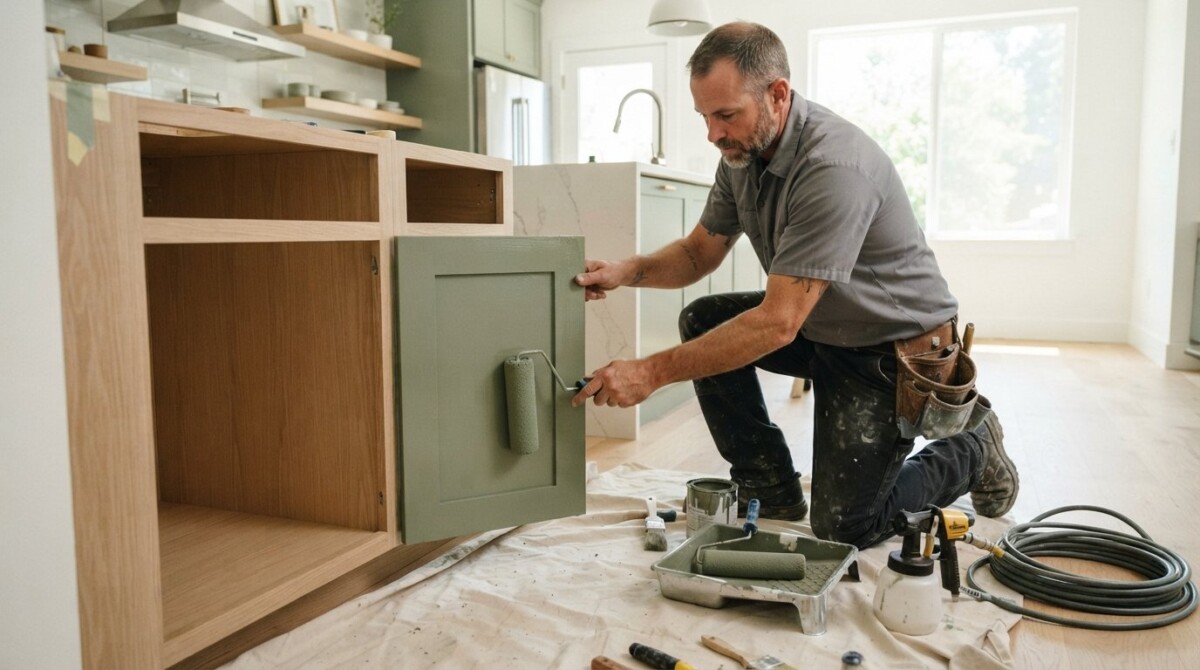
Now you are ready for the actual painting. You have two main options: brush and roll, or spray. Brushing and rolling is more accessible and requires less equipment, but it leaves a slight texture. Spraying produces a flawless, factory-like finish, but it requires a sprayer, a dust-free environment, and plenty of masking. For contractors who plan to make cabinet painting a regular service, investing in a good HVLP sprayer is worth the cost. It elevates the quality of your work and allows you to charge a premium.
Choosing Paint and Finish for Durability
The paint you choose can make or break a cabinet painting project. Not all paints are created equal, and using the wrong type can lead to chipping, yellowing, or a sticky surface. For cabinets, you want a paint that is specifically formulated for high-traffic, high-moisture environments. Look for a 100% acrylic latex enamel or a water-based alkyd. These products dry hard, resist moisture, and clean up easily with soap and water.
There is also the question of sheen. Gloss and semi-gloss paints are easier to clean and more durable, but they highlight imperfections. Satin and eggshell finishes are more forgiving, but they may not stand up to heavy use. A common professional choice is a satin or semi-gloss finish with a high-quality water-based enamel. It strikes a balance between durability and aesthetics. You should also consider the color. White and light gray are timeless choices that appeal to a broad range of buyers, but do not shy away from navy, forest green, or even black for a dramatic look. The key is to guide your client toward colors that match their style and the overall design of the home.
Drying time is another critical factor. Most paints require 24 hours between coats, and you should apply at least two coats for full coverage. In a humid environment, drying may take longer. Plan your schedule accordingly. Rushing the process can result in smudges, uneven coverage, or paint that never fully cures. A professional finish is worth the wait.
Pricing Cabinet Painting Jobs Profitably
Pricing a cabinet painting job correctly is essential for your bottom line. Underprice, and you are working for free. Overprice, and you will scare away potential clients. The key is to develop a pricing model that accounts for your time, materials, and overhead, while still being competitive in your local market.
Most contractors price cabinet painting by the linear foot of cabinetry or by the number of doors and drawers. A typical range is $30 to $50 per hour for labor, but many pros quote a flat project rate. For a standard 10-by-10-foot kitchen with 15 to 20 cabinet doors and drawers, a common price is between $3,000 and $5,000. This includes prep work, primer, two coats of paint, and reassembly. You should always do a site visit before quoting, because every kitchen is different. Factor in the condition of the cabinets, the type of finish, and any repairs that may be needed.
Here is a simple framework to help you build a profitable quote:
- Estimate your labor hours: count the number of doors, drawers, and cabinet frames, and multiply by an average of 45 to 60 minutes per piece for prep and painting.
- Add materials: include primer, paint, sandpaper, degreaser, and any new hardware or filler.
- Add overhead: include your insurance, equipment wear, and vehicle costs.
- Add your profit margin: typically 20% to 30% over your costs.
Once you have a number, present it clearly to the homeowner. Break down the costs so they understand what they are paying for. Transparency builds trust and reduces the chance of disputes later. Also, be clear about your payment terms. A 50% deposit to secure the job is standard, with the balance due upon completion.
Marketing Your Cabinet Painting Services
Having a top-notch service is only half the battle. You also need a steady flow of leads. For contractors, the traditional methods of word of mouth and yard signs still work, but they are not enough in today’s digital world. Homeowners are searching online for local professionals, and if your business does not show up, you are losing jobs to competitors who are visible.
Your website should be the centerpiece of your marketing. It needs to showcase your cabinet painting work with high-quality before and after photos. It should also include testimonials from satisfied clients, a clear description of your process, and an easy way for visitors to request a free estimate. Search engine optimization (SEO) is critical here. You want to rank for terms like “cabinet painting near me” or “kitchen cabinet refinishing.” This requires creating content that answers common questions, like this article, and optimizing your site’s technical structure.
In addition to organic search, consider paid advertising. Google Ads and Facebook Ads allow you to target homeowners in your service area who are actively searching for kitchen renovation services. You can even retarget people who have visited your website but did not fill out a contact form. This keeps your business top of mind.
Another powerful channel is lead generation platforms. Companies like Home Remodeling Leads specialize in connecting contractors with homeowners who are actively seeking services. When a homeowner fills out a request form for kitchen remodeling or cabinet painting, the lead is sent to you. This can be a highly efficient way to fill your pipeline without spending hours on cold calling or speculative marketing. You only pay for leads that match your criteria, and the homeowners are already interested in the service you offer.
When you invest in lead generation, make sure you follow up quickly. Studies show that the first contractor to respond to a lead wins the job more than 50% of the time. Have a system in place to contact new leads within 15 minutes. A phone call is best, but a text or email follow-up can work if you cannot reach them. Speed and professionalism are your competitive advantages.
Delivering a Flawless Finish: Pro Tips
What separates a good cabinet painting job from a great one? It is the details. Homeowners may not know exactly why a finish looks premium, but they can feel it. Here are some professional tips to elevate your work.
First, always fill old hardware holes and drill new ones as needed. This prevents unsightly gaps and makes your work look custom. Use a high-quality wood filler that matches the wood tone or the paint color. Second, invest in a sanding block with a comfortable grip. It gives you better control and reduces hand fatigue, which means more consistent results. Third, use a paint conditioner or extender to slow down the drying time. This helps the paint level out, eliminating brush marks and creating a smooth, even surface.
When spraying, keep the gun at a consistent distance from the surface, usually 6 to 8 inches, and move in smooth, overlapping passes. Practice on scrap wood if you are new to spraying. The finish should be applied in thin, even coats, not one heavy coat. Multiple light coats are more durable and look better. Finally, allow the paint to cure completely before reinstalling the doors. This can take up to 30 days for full hardness, but you can handle them gently after 48 hours. Advise your clients to avoid slamming doors or placing heavy items on freshly painted surfaces for a few weeks.
Connecting with Homeowners Who Need Cabinet Painting
The cabinet painting market is healthy, but it is also crowded. To stand out, you need to be visible where homeowners are looking. This means having a strong online presence, a portfolio that shows your best work, and a reputation for reliability. It also means being strategic about where you invest your marketing dollars.
One of the most effective ways to get in front of high-intent homeowners is through a lead generation service. Home Remodeling Leads is a platform that connects you with homeowners who are actively searching for kitchen and bathroom remodeling services. These are not cold leads; they are people who have already expressed a need and are ready to hire. The platform filters leads by location and project type, so you only receive inquiries that match your service area and expertise.
When you purchase a lead, you get the homeowner’s contact information and details about their project. This allows you to reach out directly with a personalized pitch. The cost of a lead is typically a fraction of the value of the job, making it a smart investment for growing your cabinet painting business. Unlike traditional advertising, where you pay whether or not you get a response, lead generation ensures you are spending money on people who are actually in the market.
To make the most of this approach, develop a follow-up script that is both professional and friendly. Introduce yourself, mention that you received their request for cabinet painting, and ask a few questions to understand their vision. Offer to come out for a free estimate. The goal is to build rapport and schedule a site visit as quickly as possible. Remember, speed matters. Homeowners often contact multiple contractors, and the one who responds first with a clear plan is likely to win the job.
By combining a superior service with a smart lead generation strategy, you can build a cabinet painting business that is both profitable and sustainable. You will not only transform kitchens, you will transform your business.
Ultimately, cabinet painting is more than just a service. It is an opportunity to create value for homeowners and for yourself. It allows you to deliver a dramatic improvement at a price point that makes sense. It positions you as a versatile expert in the home improvement space. And with the right marketing, it can fill your schedule with high-quality projects. The demand is there. The tools are available. The only question is whether you are ready to seize the opportunity.
About the Author: Lila Kensington