Finding Quality Flooring Contractor Leads for Your Home
You walk across your living room and notice a soft spot in the floorboards, or maybe a tile in the kitchen has cracked for no apparent reason. Perhaps you’re simply tired of staring at the worn-out carpet in your hallway. As a homeowner, discovering you need new flooring can feel overwhelming. You know it’s a big job, but ignoring it can lead to bigger problems like water damage, tripping hazards, or a significant drop in your home’s value. Finding reliable flooring contractor leads is the crucial first step to solving these issues efficiently and protecting your investment.
Understanding Flooring Contractor Leads
In simple terms, a flooring contractor lead is a connection to a professional who can assess, repair, or install your home’s flooring. It’s more than just a name and number; it’s a vetted starting point for a project that affects your daily life. These leads help you find experts who understand materials, subfloor conditions, and proper installation techniques.
Homeowners need these leads when facing aging materials, accidental damage, or planned upgrades. Any home can be affected, but older homes or those with previous water issues often need the most attention. A good lead connects you to a contractor who can diagnose the real problem, not just cover it up.
Why This Matters for Your Home
Your flooring is more than just a surface to walk on; it’s a foundational element of your home’s structure, safety, and comfort. Damaged or improperly installed flooring can hide serious issues. A soft spot might indicate rotting subfloor, and a cracked tile could signal an unstable base.
Ignoring these signs can turn a simple repair into a major renovation. What starts as replacing a few planks might later require replacing an entire subfloor if moisture spreads. More importantly, uneven floors are a major tripping hazard, especially for children and elderly family members. Addressing flooring issues promptly protects your property, your safety, and your wallet.
If you notice signs of this issue in your home, it may help to speak with a qualified contractor. Request a free quote or call to explore your repair or remodeling options.
Common Problems Homeowners Experience
Flooring issues rarely announce themselves with a single, obvious sign. Instead, they often present a series of frustrating and sometimes confusing symptoms. You might notice that furniture no longer sits level, or that doors begin to stick against newly uneven floors.
These problems typically stem from a few core issues. Understanding them can help you communicate more effectively when you start gathering flooring contractor leads.
- Visible Damage: Cracks in tile, deep scratches in hardwood, torn carpet, or chipped laminate.
- Performance Problems: Squeaky or bouncy floorboards, loose tiles that shift underfoot, or carpet that stays stained despite cleaning.
- Structural Concerns: Sagging or sloping floors, soft spots that feel spongy, or gaps between the floor and baseboards that are widening.
- Water & Moisture Damage: Warping planks, discoloration, a musty smell, or tiles that have lost their adhesion.
- Aging & Wear: Overall thinning of finish, widespread fading, or materials that are simply past their lifespan and failing everywhere.
- Poor Previous Installation: Seams that are peeling up, planks that are buckling, or patterns that are visibly uneven.
How Professionals Solve the Problem
A professional flooring contractor does more than just lay down new material. They provide a complete solution, starting with identifying the root cause. This systematic approach is why quality leads are so valuable,they connect you to someone who fixes the problem correctly the first time.
The process typically follows a logical sequence. First, a thorough inspection uncovers hidden issues like mold, rot, or an uneven subfloor. Then, the contractor prepares a detailed plan and estimate, explaining what needs to be done and why. This upfront clarity prevents surprises and extra costs later.
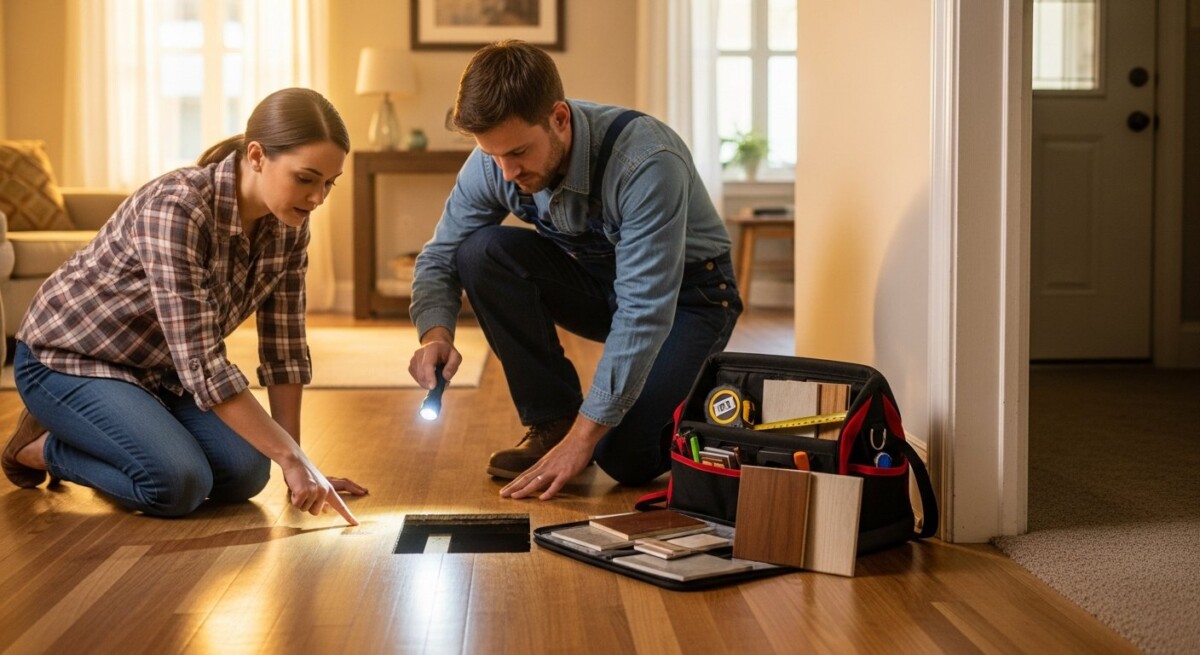
- Assessment & Measurement: The contractor inspects the area, checks the subfloor, and takes precise measurements to determine material needs.
- Material Selection & Removal: They help you choose the right flooring for your home’s needs and traffic, then safely remove old materials.
- Subfloor Preparation: This critical step involves leveling, cleaning, and repairing the foundation that the new flooring will sit on.
- Precise Installation: Using proper tools and techniques, the new flooring is cut and installed with the correct expansion gaps and adhesives.
- Finishing & Cleanup: The job is completed with trim, transitions, a thorough cleaning, and a walkthrough to ensure your satisfaction.
A professional inspection can reveal hidden issues before they become expensive repairs. Compare contractor quotes here or call to discuss your project.
Warning Signs You Should Not Ignore
Your floors often give subtle hints long before a major failure occurs. Learning to recognize these early warnings can save you significant time and money. Acting quickly can often confine a repair to a small area, whereas delay can let damage spread.
Listen to your home. Persistent symptoms, even if they seem minor, usually point to an underlying issue that won’t fix itself. Our guide on how to qualify remodeling leads explains how to identify contractors skilled at diagnosing these precise problems.
- New or Worsening Squeaks: Consistent squeaking in specific areas often means fasteners have loosened or subflooring is rubbing.
- Visible Gaps or Movement: Planks or tiles that are separating, lifting at the edges, or moving when you step on them.
- Water Stains or Warping: Any change in shape or color, especially near appliances, toilets, or exterior doors, suggests moisture intrusion.
- Difficulty Cleaning: If stains become permanent or dust/dirt seems to accumulate in new ways, the floor’s seal or surface may be compromised.
- An Uneven Feel: A slight slope or dip you can feel with your feet, or furniture that rocks on a once-level floor.
- Drafts from Below: Feeling cold air coming up through the floorboards indicates gaps that also let in moisture and pests.
What Affects the Cost of Repairs or Installation
The price of a flooring project isn’t a single number; it’s a sum of several factors unique to your home. Understanding these variables helps you make sense of estimates and budget realistically. The size of the area is the most obvious factor, but it’s not the only one.
Material choice causes the widest cost variation. Luxury vinyl plank, laminate, carpet, hardwood, and tile all have different price points. However, labor for preparation and installation can sometimes equal or exceed material costs, especially in complex situations. The condition of your subfloor is a major wildcard,extensive leveling or repair adds to the project scope.
Costs can vary depending on the condition of your home. The best way to know the price is to get a personalized estimate. Request free quotes from contractors or call today.
How to Choose the Right Contractor
With a list of potential flooring contractor leads, your next step is to narrow them down to the best fit for your project. This decision is about trust and capability, not just price. A reliable contractor will make the process smooth and the results long-lasting.
Start by verifying the basics: a valid state license, liability insurance, and workers’ compensation coverage. This protects you from liability if an accident occurs. Then, look for proof of experience with your specific type of flooring and the scale of your project. Just as you would for a kitchen, the process for finding quality kitchen remodeling leads applies here,seek specialists with proven results.
- Check Credentials & Reviews: Verify licenses and insurance, and read recent customer reviews on multiple platforms.
- Ask for a Detailed, Written Estimate: A good quote breaks down material, labor, and preparation costs line-by-line, avoiding vague totals.
- Compare Multiple Quotes: Get at least three estimates to understand the market rate and different approaches to your project.
- Ask About Timeline & Process: Understand how long the project will take, what the daily workflow looks like, and how your home will be protected.
- Review Past Work: Ask for photos or addresses of recent, similar projects to assess the quality and style of their finished work.
Long-Term Benefits of Professional Work
Investing in professional flooring installation or repair pays dividends for years to come. It’s not just an immediate cosmetic upgrade; it’s an enhancement to your home’s fundamental integrity. Quality workmanship ensures your floors are safe, stable, and beautiful for their full intended lifespan.
Properly installed flooring provides better insulation, which can reduce energy bills. It also withstands daily wear and tear, meaning you won’t face repeated repairs. Most importantly, it significantly boosts your home’s resale value and appeal to future buyers, often offering a strong return on investment. A well-executed project, guided by solid strategies for generating remodeling leads, leads to lasting satisfaction and peace of mind.
How long does a typical flooring installation take?
The timeline depends heavily on the project’s size, material, and subfloor condition. A simple carpet replacement in one room might take a day, while installing hardwood throughout an entire home with significant subfloor repair could take a week or more. Your contractor should provide a clear schedule after their initial assessment.
Can I install new flooring over the old flooring?
Sometimes, but it’s not always recommended. While some materials can be installed over existing, perfectly sound flooring, it often raises the floor height and can cause issues with doors and transitions. A professional will check if the old floor is suitable as a base or if removal is necessary for a proper, long-lasting installation.
What is the most durable type of flooring for a busy household?
For high-traffic areas with kids and pets, luxury vinyl plank (LVP) and tile are top contenders for durability and water resistance. Some engineered hardwoods also offer good durability. The best choice balances your lifestyle needs with your aesthetic preferences and budget.
Will replacing my flooring be a disruptive process?
There will be some disruption, but a professional team will work to minimize it. Furniture will need to be moved, and you likely won’t be able to use the room during active installation. Good contractors will contain dust, maintain a clean worksite, and communicate the daily plan to help you manage the temporary inconvenience.
How do I maintain my new floors?
Maintenance varies by material. Your contractor should provide you with specific care instructions. Generally, use recommended cleaners, avoid excessive water, place protective pads under furniture, and address spills quickly. Proper maintenance is key to preserving the beauty and longevity of your investment.
What warranties should I expect?
You should receive two warranties: one on the materials from the manufacturer and one on the labor from the installer. Read both carefully to understand what is covered, for how long, and what actions might void the warranty. A reputable contractor stands behind their workmanship.
Addressing flooring issues early is one of the smartest moves a homeowner can make. It protects your home’s structure, ensures your family’s safety, and preserves your property’s value. By starting with quality flooring contractor leads and comparing detailed quotes, you can move forward with confidence, knowing you’ve made an informed decision for your home’s future.
About the Author: Lila Kensington