Marketing for Remodelers: Win Bigger Jobs With Case Studies
Marketing for remodelers using customer case studies turns past projects into premium proof. Call (510)-663-7016 to start winning bigger jobs today.

By Adam Miller
You just wrapped a $75,000 kitchen remodel. The homeowners are thrilled, the photos are stunning, and your crew did flawless work. But here is the problem: none of that matters to your next big prospect unless you can prove it. Most remodelers finish a project, collect the final check, and move on to the next job without ever capturing the story that could win them their next six-figure contract. That is a massive missed opportunity. Marketing for remodelers using customer case studies to win bigger jobs is not about bragging. It is about building a repeatable system that turns finished work into persuasive proof, the kind of proof that makes a homeowner with a $100,000 budget feel safe choosing you over the cheaper bid. In this guide, you will learn exactly how to select the right projects, capture the right details, structure a compelling case study, and deploy it throughout your sales process to command higher prices and close larger deals.
Why Case Studies Outperform Every Other Marketing Asset
Remodelers have no shortage of marketing channels: paid leads, social media, yard signs, referral programs. But when a homeowner is comparing three contractors for a major addition or full-home renovation, the deciding factor is almost never the ad they saw. It is trust. Case studies are the only marketing asset that simultaneously demonstrates your expertise, proves your process, and reduces the perceived risk of hiring you. A testimonial says "they were great." A case study says "here is exactly what we did, how we handled the inevitable problems, and what the final result looked like, down to the numbers." That level of transparency is what separates premium remodelers from commodity bidders.
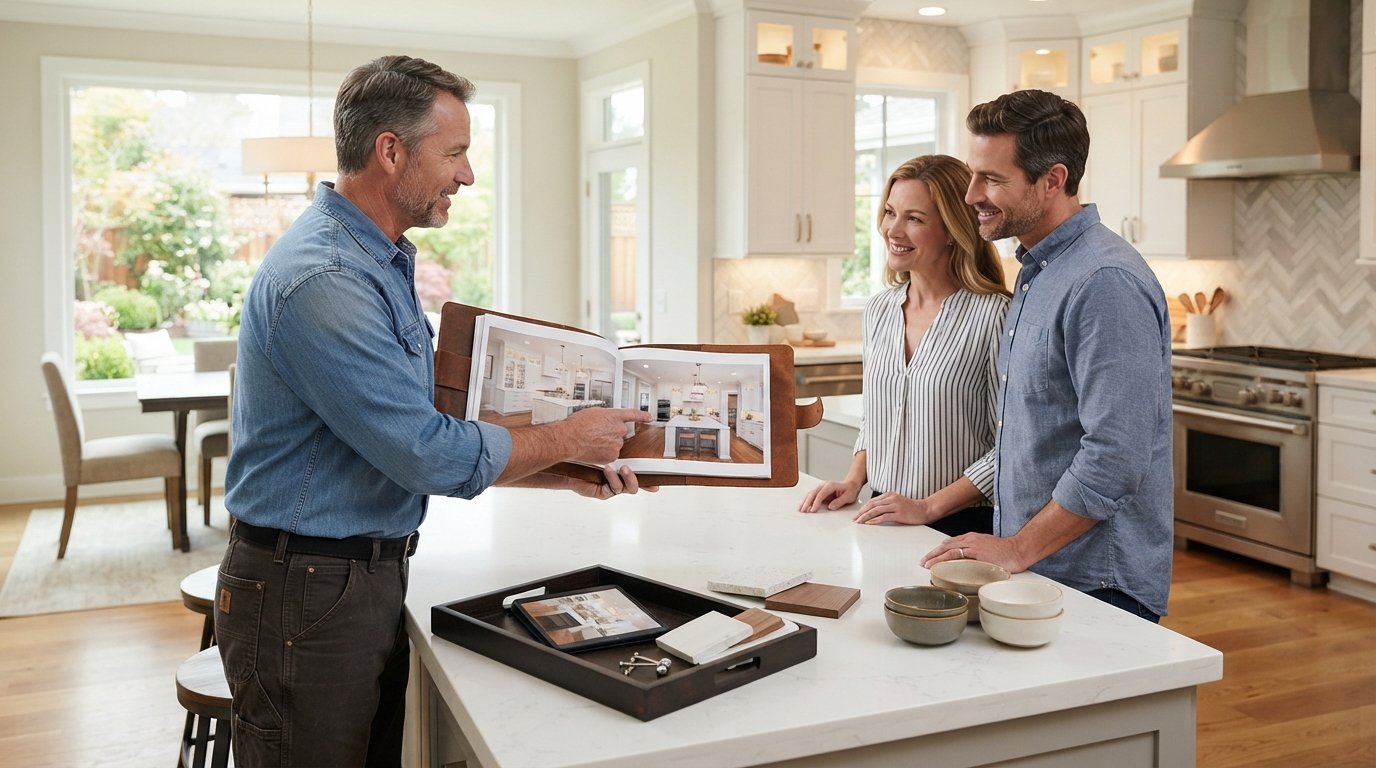
Consider the psychology at play. A homeowner planning a $120,000 addition is not just buying construction services. They are buying certainty. They have heard horror stories about contractors who disappear, budgets that balloon, and timelines that stretch into eternity. When you hand them a two-page case study that walks through a similar project, including the challenge, the scope, the timeline, and the outcome, you are answering the questions they are too polite to ask. You are showing them that you have done this before, that you have a process, and that you deliver. That is worth more than any discount you could offer.
Case studies also compound over time. Unlike a paid ad that stops working the moment you stop paying, a well-written case study lives on your website, in your email sequences, in your proposal packets, and in your follow-up conversations. It becomes a sales asset your entire team can use. And because it is specific to your business, it cannot be copied by a competitor. This is especially important for remodelers who buy leads from platforms like HomeRemodelingLeads, where speed and differentiation determine who wins the job. When you are competing against three other contractors who called the same lead within minutes, the one who can follow up with a relevant case study stands out immediately.
Choosing Which Completed Jobs Make Strong Case Studies
Not every finished project deserves a case study. A simple vanity replacement or a one-day tile job does not carry enough weight to persuade a homeowner considering a major renovation. You want projects that mirror the jobs you want more of. If your goal is to win more whole-home remodels, your case studies should feature whole-home remodels. If you want to break into high-end bathroom renovations, showcase those. The rule is simple: your case studies should look like the jobs you are trying to sell, not the jobs you are trying to leave behind.
Start by reviewing your last twelve months of completed projects and flagging the ones that meet three criteria: the client was happy, the project had a clear challenge or constraint, and the result was visually impressive or measurably significant. A project with a happy client but no story is less useful than one where you solved a real problem. The story is what makes the case study compelling. A homeowner who says "they did great work" is nice. A homeowner who says "we had a leaking roof, a tight budget, and a deadline before our daughter's wedding, and they delivered two days early" is marketing gold.
Here is a simple framework for ranking potential case studies:
- Relevance: Does this project match the type, size, and budget of the jobs you want to win next quarter?
- Challenge: Was there a real problem, constraint, or complication that you solved? (These make the best stories.)
- Outcome: Is there a clear, measurable, or visually dramatic result?
- Client willingness: Will the homeowner agree to be featured, provide quotes, and allow photos?
- Recency: Was the project completed within the last eighteen months? (Older projects feel stale.)
Once you have ranked your projects, choose three to five to develop into full case studies. You do not need dozens. A handful of well-crafted, detailed case studies will outperform a library of thin, generic ones. Quality beats quantity every time. And if you are using shared leads from a platform, having a few strong case studies ready means you can respond to a new lead with a relevant example within minutes, which dramatically increases your conversion rate.
What to Capture During a Project for Later Marketing Use
The biggest mistake remodelers make is waiting until the project is finished to think about marketing. By then, the details are fuzzy, the client has moved on, and the photos are the only thing you have. The best case studies are built from data captured during the project, not reconstructed afterward. This means you need a simple system for collecting information as you go. It does not have to be complicated. A shared folder, a project checklist, or even a dedicated email thread can work. The key is consistency.
During every project you intend to feature, capture the following:
- Before photos and video: Wide shots of every room or area you will touch, plus close-ups of problem areas (water damage, outdated fixtures, structural issues).
- Client quotes and reactions: Ask the homeowner early on why they decided to remodel and what they were most worried about. Record their answers (with permission) or write them down immediately.
- Project scope and specs: Materials used, brands specified, square footage, and any unique design elements.
- Timeline and milestones: Start date, key milestones, completion date, and any delays or accelerations.
- Budget range and final cost: You do not have to publish exact numbers, but having them helps you frame the value story.
- Problems and solutions: Every project has surprises. Document them. These are the moments that prove your expertise.
After the project is complete, schedule a fifteen-minute phone call or in-person interview with the homeowner. Ask them three questions: What was the biggest concern you had before we started? What surprised you most about the process? And what would you tell a friend who was considering a similar project? Their answers, in their own words, become the backbone of your case study. Authentic client language is far more persuasive than polished marketing copy. It sounds real because it is real.
Also, invest in professional photography. This is not the place to save money. A case study without high-quality before-and-after images is like a restaurant menu without pictures of the food. The visual proof is half the argument. Hire a photographer who specializes in interior and architectural shots, and budget for it as a marketing expense, not a project cost. If you are on a tight budget, read our guide on marketing for remodelers on a small budget for practical ways to allocate resources without sacrificing quality.
Structuring a Case Study Around Problem, Scope, and Outcome
A case study is not a project description. It is a story with a structure. The most effective structure for remodelers follows a simple three-part arc: problem, scope, outcome. This mirrors the way homeowners think about their own projects. They have a problem (an outdated kitchen, a cramped layout, a failing roof). They need a solution (your scope of work). And they want a result (the outcome). When you frame your case study this way, you make it easy for the reader to see themselves in the story.
Part 1: The Problem. Start with the client's situation before you arrived. What was not working? What were they worried about? What constraints did they have (budget, timeline, structural issues, family needs)? This section should be one to two paragraphs and should end with the client's decision to hire you. Include a direct quote from the homeowner about their concerns. For example: "We knew the bathroom was outdated, but we were terrified of the disruption. We have two young kids and only one bathroom, so we could not afford a long delay." That quote does more work than any marketing copy you could write.
Part 2: The Scope. Describe what you did, but focus on the decisions and the process, not just the materials. Homeowners want to know how you handled the challenges. Did you phase the work to minimize disruption? Did you source a specific material that solved a moisture problem? Did you coordinate with an engineer or designer? This is where you demonstrate expertise. Keep it concise but specific. Use bullet points if the scope is complex. For example: "We phased the project into two stages so the family had a working bathroom every night. We also discovered hidden water damage behind the tub, which we addressed with a new waterproofing system before tiling." That detail proves you are not just a installer; you are a problem solver.
Part 3: The Outcome. This is where you show the result. Include the after photos, the client's final quote, and any measurable outcomes (timeline, budget adherence, increased home value). If the client has a specific reaction, capture it. "We finished two days early and under budget, and the client told us it was the easiest renovation they had ever been through." That is the sentence that makes a homeowner pick up the phone. End with a soft call to action, such as "If you are planning a similar project, we would be happy to walk you through our process."
Keep the entire case study to one or two pages. Homeowners will not read a ten-page report. They will skim. Use subheadings, short paragraphs, and plenty of images. Make it easy to consume on a phone. And always include a clear next step, whether that is a phone number, a contact form, or a link to your consultation scheduling page.
Placing Case Studies in the Sales Follow-Up Sequence
Most remodelers treat case studies as website content and nothing else. That is a waste. Case studies are sales tools, and they belong in every stage of your follow-up sequence. The key is matching the right case study to the right moment. When a new lead comes in, you do not send a generic brochure. You send a case study that mirrors their project. This is especially powerful when you are working with purchased leads from a platform like HomeRemodelingLeads, where the homeowner has already expressed interest in a specific category like bathroom remodeling or roofing. You can pull the relevant case study and send it within minutes, which dramatically increases your chances of standing out.
Here is how to deploy case studies at each stage:
- Initial response to a lead: Within five minutes of receiving a lead, send a short text or email that includes a link to a case study matching their project type. Say something like: "Hi [Name], I saw you are interested in a bathroom remodel. Here is a recent project we completed that was similar to what you described. Happy to answer any questions." This positions you as responsive and relevant.
- After the first consultation: Follow up within twenty-four hours with a case study that addresses the specific concerns the homeowner raised during the consultation. If they were worried about timeline, send a case study that highlights your on-time completion rate. If they were worried about budget, send one that shows you stayed on budget despite surprises.
- When the homeowner is comparing bids: This is the most critical moment. Most homeowners collect two or three bids and then stall. This is where a case study can tip the decision. Send a short email that says: "I know you are comparing options. I wanted to share a case study from a project similar to yours so you can see exactly how we handle the process. No pressure, just helpful context." That approach feels helpful, not pushy.
- After the job is won (for future referrals): Once you have completed a project for a client, send them a case study of their own project as a thank-you. This reinforces their decision and makes them more likely to refer you to friends and neighbors.
If you are running a longer sales cycle, such as a whole-home remodel or an addition, space your case studies out over time. Do not send everything at once. Use one case study per touchpoint, and always add a short personal note explaining why you chose that specific example. Personalization matters. A generic email with a link is easy to ignore. A short note that says "I remembered you mentioned you were worried about dust during construction, so I thought you might like to see how we handled that on a similar project" is much harder to ignore.
Also, train your sales team (or yourself, if you are a solo remodeler) to use case studies in conversation. When a homeowner asks a question about timeline or budget, the best answer is not a generic reassurance. It is a specific example: "We just finished a kitchen in your neighborhood that had the same layout challenge. We completed it in six weeks instead of the eight weeks the homeowner expected. I can send you that case study if you want to see the details." That response builds instant credibility.
Using Case Studies to Justify Premium Pricing
One of the hardest conversations in remodeling is the price conversation. Homeowners often compare bids side by side and assume the lowest number is the best value. Case studies are your best tool for reframing that conversation. They allow you to demonstrate the value behind your price, not just the cost. When you can show a homeowner exactly what they get for their money, including the process, the communication, the problem-solving, and the final result, price becomes a secondary consideration. They are no longer comparing numbers. They are comparing outcomes.
The key is to use case studies to highlight the hidden costs of choosing a cheaper contractor. For example, you can structure a case study around a project where you had to fix another contractor's mistakes. That story does two things: it shows your expertise, and it subtly warns the homeowner about the risk of hiring on price alone. You can also use case studies to show the value of your process. If you have a detailed pre-construction planning phase, a dedicated project manager, or a warranty program, highlight those in the case study. Those are the differentiators that justify a higher price.
Another effective strategy is to include a value section in your case study that breaks down what the homeowner received beyond the construction itself. For example: "This project included a dedicated project manager, daily communication updates, a two-year workmanship warranty, and post-completion follow-up to ensure everything was working as expected." When a homeowner sees that list, they understand that your price includes services that a cheaper competitor may not offer. That is how you justify premium pricing without discounting.
Finally, use case studies to attract higher-value clients in the first place. When your marketing materials feature large, complex, high-end projects, you attract homeowners who are planning similar projects. The case study acts as a filter. It signals that you are the kind of remodeler who handles serious projects, not just small repairs. Over time, this positioning allows you to raise your prices and be more selective about the jobs you take. And if you are supplementing your marketing with purchased leads, you can use case studies to qualify leads faster and focus your time on the homeowners who are ready to invest in quality. For professionals in other industries who need to connect with high-intent clients, similar principles apply to legal lead generation, where pre-screened prospects make all the difference.
The bottom line is this: marketing for remodelers using customer case studies to win bigger jobs is not a nice-to-have. It is a core business strategy. It turns your past work into your most persuasive salesperson, and it gives you the leverage to command the prices your work deserves. Start with one project. Capture the story. Write it up. Use it. Then repeat. You will be surprised how quickly a few well-crafted case studies change the conversations you have with prospective clients.