Seasonal Trends in Home Remodeling Demand for Contractors
Seasonal trends in home remodeling demand for contractors shape when to market and hire. Call 5106637016 to build a year-round lead pipeline.

By Caleb Griffin
Every contractor knows the feeling: the phone rings nonstop in spring, then seems to go silent by midwinter. That rhythm is not random. Home remodeling demand follows predictable seasonal cycles that shape when homeowners research projects, request bids, and sign contracts. Understanding those patterns is one of the most reliable ways to keep crews busy, stabilize revenue, and spend marketing dollars where they actually convert. Whether you install roofing, replace windows, remodel kitchens, or handle HVAC work, the seasonal trends in home remodeling demand for contractors can either create feast-or-famine chaos or become the foundation of a year-round growth plan.
Why Home Remodeling Demand Follows a Seasonal Cycle
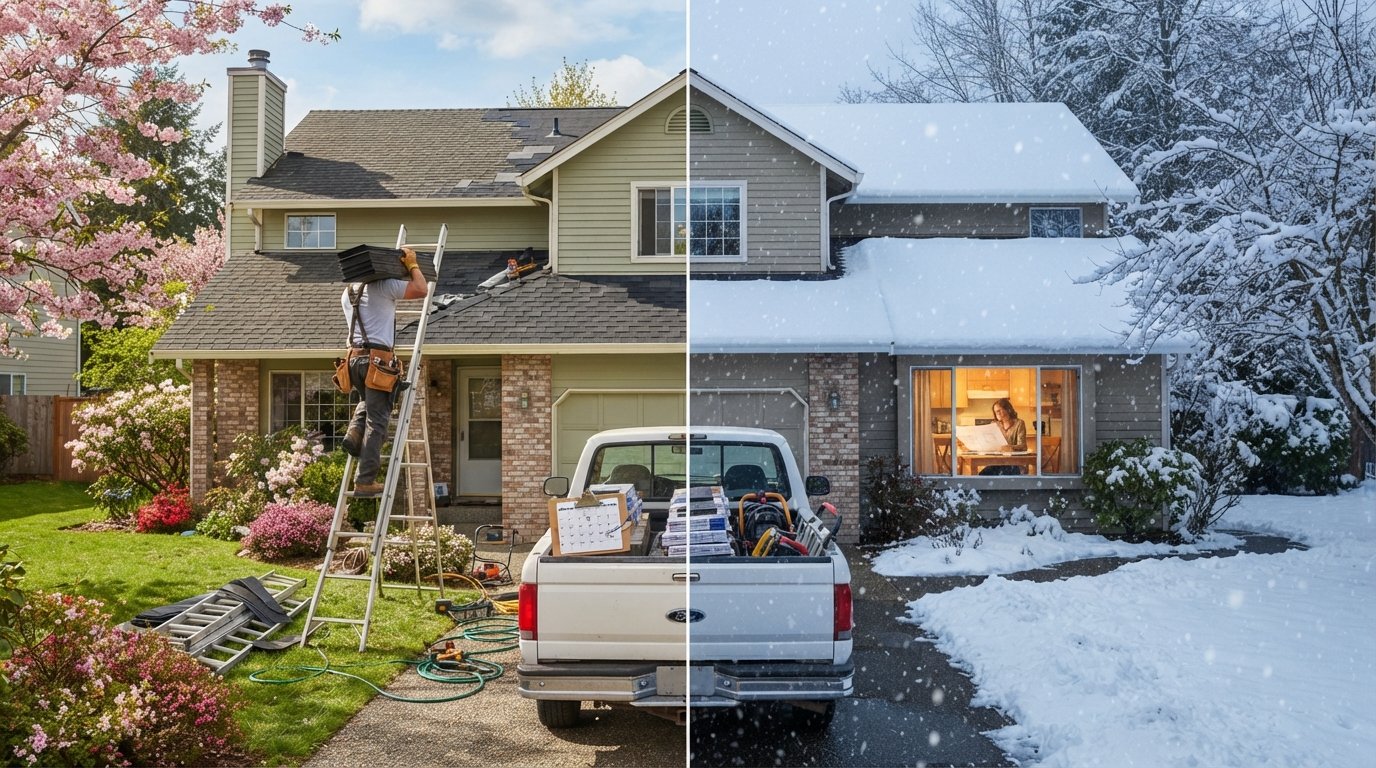
Home improvement spending is tied to weather, daylight, tax refunds, holidays, and even school calendars. Most homeowners do not wake up in January and decide to gut a bathroom on a whim. They respond to environmental and financial triggers: warmer temperatures that make exterior work possible, tax refunds that fund down payments, and the emotional pull of hosting family during the holidays. Contractors who map these triggers can forecast demand instead of reacting to it.
The result is a predictable wave. Exterior projects cluster in warmer months because materials like asphalt shingles, siding, and concrete behave better in mild temperatures. Interior projects rise in colder months because homeowners spend more time indoors and notice the flaws in their kitchens and bathrooms. Layering in tax season, insurance claim cycles, and year-end budgeting creates a calendar that repeats with remarkable consistency.
This matters because remodeling is a high-consideration purchase. Homeowners typically spend weeks or months researching before they call. That means the leads you receive in March were often generated by curiosity in January. If you want a full pipeline in spring, you need to be visible and capturing interest during the quiet winter weeks when your competitors scale back.
Spring: The Busiest Season for Exterior and Full Home Projects
Spring is the undisputed peak of the remodeling calendar. As soon as the last frost passes, homeowners who spent winter browsing inspiration photos start requesting quotes. Roofing, window replacement, siding, decking, and full exterior renovations all surge. Tax refunds arriving in March and April give many households the cash cushion they need to commit.
For contractors, spring is a double-edged sword. Demand is high, but so is competition. Every roofer, window installer, and general contractor is fighting for the same homeowner attention. The contractors who win are the ones who already have leads in the pipeline before the rush begins, not the ones scrambling to buy advertising in April.
Here is what typically drives spring demand:
- Warmer temperatures that allow roofing, siding, and concrete work
- Tax refunds funding deposits and material purchases
- Homeowners preparing to sell before the summer buying season
- Storm and hail damage becoming visible after snowmelt
- Longer daylight hours making exterior inspections easier
Smart contractors use spring to lock in summer work. If you wait until June to market your services, you are already behind. The winning move is to capture high-intent leads in late winter and early spring, then convert them into signed contracts before the peak crunch hits. This is where a reliable lead source pays for itself. Platforms like HomeRemodelingLeads connect contractors with homeowners who are actively searching, which means you are not cold-calling, you are responding to real demand.
Summer: Peak Exterior Work and Vacation Slowdowns
Summer keeps exterior demand strong but introduces a subtle shift. Families take vacations, kids are out of school, and household decisions get delayed. Roofing and window work continue at a healthy pace, but interior remodeling often dips because homeowners do not want construction crews in the house during the few months they have to relax.
Contractors should use summer to complete exterior projects and build cash reserves for the slower months ahead. It is also an ideal time to nurture leads that did not convert in spring. Many homeowners get quotes in April, hesitate, then revisit those quotes in July when their schedules calm down. A simple follow-up sequence can recover a surprising amount of revenue.
Summer is also when insurance-driven work peaks. Hailstorms, wind damage, and summer storms generate roofing and siding claims that keep contractors busy into fall. If you work in storm-prone regions, aligning your marketing with weather events can dramatically boost your lead flow.
Fall: The Second Peak and the Race to Winterize
Fall is the second-biggest season for remodeling demand. Homeowners realize that if they want a new roof, windows, or siding before winter, they need to act now. There is a real urgency that drives faster decision-making. At the same time, interior projects start climbing again as families spend more time at home and begin thinking about holiday gatherings.
Kitchen and bathroom remodels often see a fall spike because homeowners want the work finished before Thanksgiving and Christmas. Contractors who specialize in interior work should treat September and October as their own peak season, not as a wind-down after summer.
Fall also brings a wave of homeowners trying to use remaining home equity lines of credit or annual budgets before the year ends. Financial professionals see similar urgency in other lending categories, and some contractors even partner with referral sources in adjacent industries. For example, professionals working with mortgage lead generation platforms often see the same year-end push from homeowners trying to close loans before rates or budgets change.
The key fall strategy is speed. Homeowners in September and October are motivated but impatient. If you respond to their inquiry within minutes rather than days, your close rate can double. This is exactly why real-time lead delivery matters so much during peak season.
Winter: Interior Projects, Planning, and Next-Year Pipelines
Winter is misunderstood. Many contractors assume demand dies, so they cut marketing and lay off crews. In reality, winter is when serious homeowners plan. They research costs, compare contractors, and book projects for spring. If you disappear in December and January, you lose the chance to be the contractor they call in March.
Interior work remains steady through winter. Bathroom remodels, basement finishing, kitchen updates, and flooring installations all continue because they are not weather-dependent. Homeowners who are stuck indoors notice every flaw in their living space, and holiday hosting often exposes outdated kitchens and bathrooms that need attention.
Winter is also the best time to build your pipeline for the coming year. Instead of waiting for spring leads to appear, you can generate and nurture them during the slow months. This is where the right lead source becomes a strategic advantage. Rather than guessing which channels will work, you can tap into a steady stream of homeowners who are already researching projects. HomeRemodelingLeads, for instance, offers pre-qualified leads across categories like roofing, windows, bathroom remodeling, solar, flooring, and HVAC, which lets you stay busy even when the weather slows exterior work.
If you want to understand how technology is changing the way contractors attract and convert homeowners, our guide on smart home remodeling contractors explains how modern upgrades influence buyer decisions and what that means for your sales process.
How Seasonal Demand Varies by Remodeling Category
Not every trade follows the same curve. Understanding your specific category's seasonality helps you allocate marketing budget and crew capacity more intelligently.
Roofing and exterior work peak hardest in spring and fall, with a summer lull in some regions due to extreme heat. Window replacement follows a similar pattern, though energy-efficiency concerns drive a secondary spike in late fall as homeowners prepare for winter heating bills. Bathroom and kitchen remodeling tend to peak in fall and winter, when homeowners are indoors and planning for the next year. Basement finishing is almost entirely a cold-weather project because it is interior work that does not require good weather. Solar installation peaks in spring and summer when homeowners see high electricity bills and want to take advantage of sunnier months. HVAC work is split: cooling systems dominate spring and summer, while heating systems surge in fall and winter.
Contractors who specialize in a single category can lean into their peak season and use the off-season for planning, training, and pipeline building. Contractors who offer multiple services can smooth their revenue by shifting marketing focus from one category to another as the seasons change. The most resilient remodeling businesses are the ones that treat seasonality as a planning tool rather than an excuse.
Turning Seasonal Trends Into a Year-Round Lead Strategy
The contractors who thrive are not the ones who work hardest during peak season. They are the ones who prepare for peak season during the off-season. That means building a lead pipeline in advance, maintaining consistent marketing even when demand is low, and using data to predict when each category will heat up.
Here is a simple framework for aligning your lead strategy with seasonal demand:
- Map your category's peak months and slow months using your own historical data.
- Start marketing 60 to 90 days before each peak so leads are ready when demand hits.
- Use the slow season to follow up with past leads who were not ready to buy.
- Diversify your services or lead sources so one slow season does not sink your revenue.
- Track cost per lead and close rate by month to refine your seasonal budget.
This framework works whether you generate leads yourself or buy them from a platform. The advantage of buying pre-qualified leads is speed: you do not have to wait for your marketing to mature. You can turn on lead flow when you need it and scale back when your crews are full. That flexibility is especially valuable during shoulder seasons when demand is unpredictable.
Why Real-Time Leads Matter More During Peak Season
During peak season, speed is everything. Homeowners requesting quotes often contact three or four contractors within the same hour. The first contractor to respond has a massive advantage. Studies across the industry consistently show that responding within five minutes dramatically increases conversion compared to responding within an hour.
This is why real-time lead delivery is not a luxury, it is a competitive necessity. If you are relying on slow lead sources or outdated lists, you are losing jobs to contractors who respond faster. A real-time lead exchange gives you immediate access to homeowners who are actively searching, which means you can be first in line instead of last.
Real-time leads also help you manage capacity. When your crew is booked solid, you can pause lead purchases. When you have gaps, you can turn them back on. That level of control is impossible with traditional advertising, which takes weeks to ramp up or down.
Preparing Your Business for Seasonal Swings
Seasonality is not a problem to solve. It is a pattern to exploit. Contractors who understand when demand rises and falls can staff accordingly, negotiate better material pricing in the off-season, and schedule marketing campaigns that hit homeowners at the exact moment they start thinking about a project.
The most important preparation is financial. Peak season generates cash, but slow season drains it. Contractors who set aside reserves during busy months can survive the winter without panic. They can also invest in lead generation during the slow months when competitors cut back, which positions them to dominate when spring arrives.
Another key preparation is operational. If you know bathroom remodeling peaks in November, you can hire and train additional installers in September. If you know roofing peaks in April, you can secure material suppliers in February. Planning ahead turns seasonal chaos into a predictable, profitable rhythm.
Finally, preparation means having a reliable lead source that does not disappear when you need it most. Whether you are buying exclusive leads at premium prices or shared leads at lower cost, the goal is consistent access to homeowners who are ready to hire. That consistency is what separates contractors who grow year after year from those who ride the seasonal roller coaster without ever building lasting momentum.
Seasonal trends in home remodeling demand for contractors are not a mystery. They are a map. Learn to read it, plan around it, and you will build a remodeling business that stays busy, profitable, and competitive no matter what month the calendar shows.