Sustainable Flooring Leads: A Guide for Eco-Conscious Homeowners
Turn eco-conscious buyers into booked flooring projects. Call (510)-663-7016 to access sustainable flooring leads for eco conscious homeowners.

By Julia Ellis
Homeowners today are asking harder questions about the materials that go into their homes, and flooring is near the top of that list. They want to know where the wood was sourced, how the laminate was manufactured, and whether the adhesive off-gasses into the nursery. For flooring contractors, this shift is not a burden: it is a qualified pipeline waiting to be claimed. The challenge is separating genuine eco-conscious buyers from casual browsers, and then presenting your materials in a way that makes the premium feel like the smarter long-term purchase. That is exactly what sustainable flooring leads for eco conscious homeowners are designed to do when you approach them with the right message.
Why Eco-Conscious Flooring Buyers Are a High-Value Lead Segment
Green building sentiment has moved from a niche preference to a mainstream purchase criterion. Homeowners who actively seek sustainable flooring tend to be more informed, more research-driven, and more willing to invest in a contractor who can explain material trade-offs clearly. They are not usually looking for the cheapest square-foot price. They are looking for a floor that aligns with their values and holds up over time, which means your close rate can be higher when your pitch is built around lifecycle thinking rather than a race to the bottom on price.
This audience also generates more referral activity. Eco-conscious homeowners often belong to community groups, sustainability forums, and neighborhood networks where they share contractor recommendations. One well-executed bamboo or reclaimed wood installation can turn into several conversations about who did the work and how the materials were selected. That organic word-of-mouth is precisely the kind of compounding asset that makes sustainable flooring leads for eco conscious homeowners worth pursuing beyond a single transaction.
From a lead quality standpoint, these buyers tend to arrive with clearer project scopes. They have often already researched material categories, understand that sustainable options can carry a premium, and are ready to discuss timelines. When you buy leads from a platform that screens for intent, you spend less time educating tire-kickers and more time converting homeowners who already believe in the value of what you sell. If you are still refining your overall approach to sourcing projects, the principles in finding quality flooring contractor leads apply directly to this eco-focused segment as well.
Materials That Resonate With Sustainability-Minded Buyers
The single most important conversion lever with this audience is material fluency. If you cannot speak confidently about sourcing, certifications, and end-of-life disposal, the homeowner will notice, and your credibility will erode before you ever send a quote. The good news is that the sustainable flooring category is broad enough to fit nearly every budget and design preference, which means you rarely have to talk a buyer out of their aesthetic goals to meet their environmental ones.
Here are the material categories that consistently open doors with eco-conscious homeowners, and the talking points that matter most for each:
- Reclaimed and salvaged wood: Offers a story, diverts material from landfills, and delivers a character that new wood cannot replicate. Emphasize provenance and the reduced embodied carbon compared with virgin timber.
- FSC-certified hardwood and bamboo: Certification signals responsible forest management, while bamboo grows quickly and renews fast. Be ready to explain finish systems and formaldehyde-free adhesives.
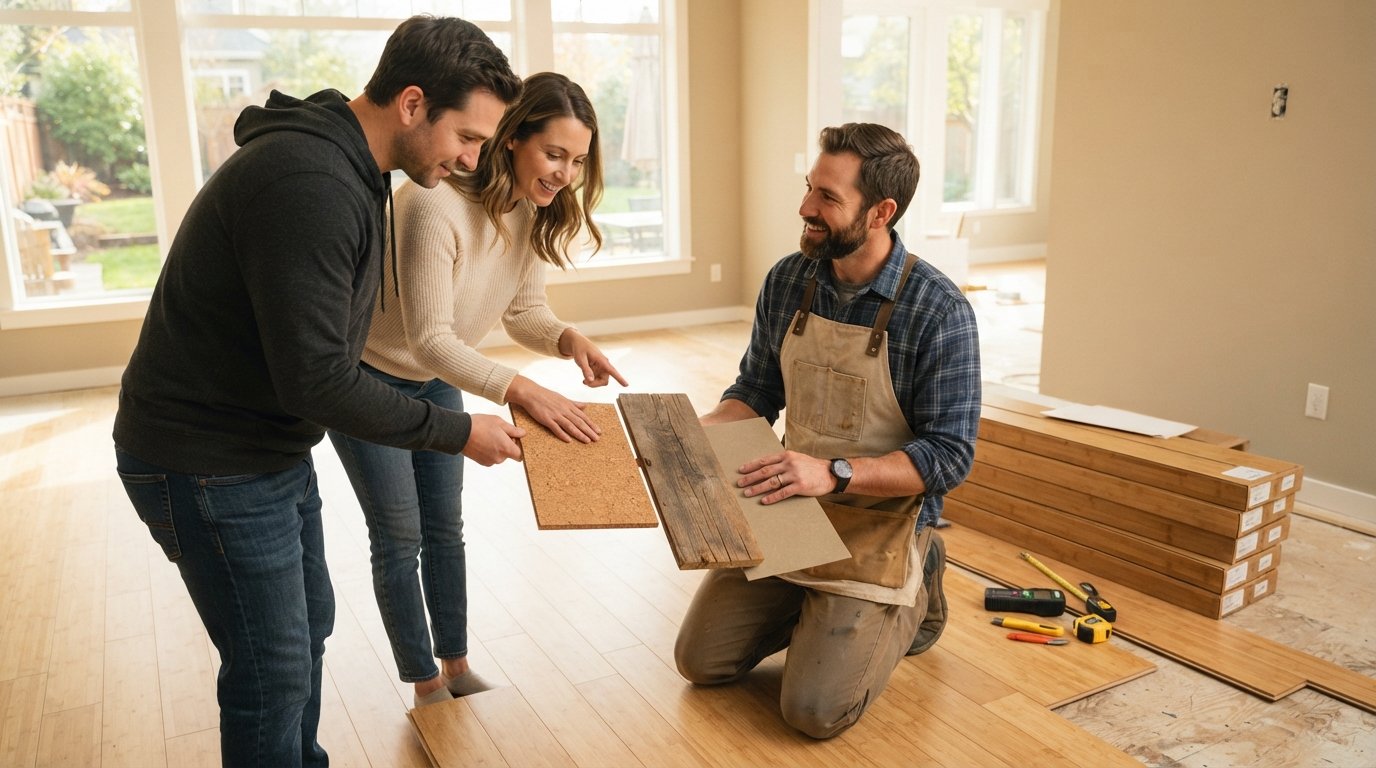
- Cork and natural linoleum: Renewable, biodegradable, and comfortable underfoot. These are strong options for kitchens, playrooms, and anyone with chemical sensitivity concerns.
- Recycled-content carpet tile and resilient flooring: Good for basements and rental units where moisture and durability are priorities. Highlight recycled content percentages and take-back programs.
- Refinishing existing hardwood: Often the greenest option because it avoids new material altogether. Sanding and sealing an existing floor keeps tons of waste out of the landfill and preserves the home's original character.
Notice that these options span multiple price tiers. That matters because eco-consciousness does not automatically mean a high budget. A homeowner remodeling a starter home may be drawn to cork or refinishing, while a custom build client may want reclaimed wide-plank oak. Your job is to match the material story to the buyer's actual situation, not to upsell everyone into the most expensive green product on your sample board.
Qualifying Interest Versus Willingness to Pay a Premium
The biggest mistake contractors make with this segment is assuming that stated environmental concern equals budget approval. Plenty of homeowners say they care about sustainability until the quote arrives, at which point the conversation shifts abruptly to square-foot pricing. Effective sustainable flooring leads for eco conscious homeowners require a qualification step that separates values from purchasing power, and that step should happen early, ideally in the first phone call.
A simple qualification framework works well. First, ask what materials they have already researched and why those materials appealed to them. The specificity of the answer tells you how far along they are. Second, ask about the budget range they have in mind and whether they have compared conventional versus sustainable options at similar quality levels. Third, ask about timeline and decision-makers. A homeowner who has already discussed the project with a partner and set a realistic range is far more likely to convert than someone who is still browsing inspiration photos.
When you sense hesitation about the premium, do not immediately discount. Instead, reframe the conversation around lifecycle cost. A reclaimed wood floor that lasts forty years and can be refinished multiple times often costs less per year of service than a cheap laminate that fails in eight. Walk the homeowner through the math out loud, including maintenance, refinishing intervals, and replacement. Many eco-conscious buyers respond far better to that logic than to a percentage-off promotion, because it respects their intelligence and aligns with the values that brought them to you in the first place.
How Laminate and Wood Refinishing Fit the Eco-Conscious Conversation
Contractors sometimes assume that laminate is off the table with green-minded buyers. That is a mistake. Modern laminate can be a legitimate sustainability story when it is manufactured with recycled content, low-emission binders, and a take-back program. The key is honesty: do not oversell laminate as equivalent to reclaimed hardwood. Position it as an accessible entry point that keeps a renovation within budget while still improving on vinyl or carpet from an emissions standpoint. Homeowners appreciate that kind of straight talk, and it builds trust for future projects.
Wood refinishing deserves even more attention in this segment. Refinishing an existing floor is often the most sustainable decision a homeowner can make, because the greenest floor is the one that already exists. No new timber is harvested, no manufacturing emissions are generated, and no demolition waste goes to the landfill. For contractors, refinishing leads are also efficient: smaller material costs, faster timelines, and strong margins. When you present refinishing as a premium environmental choice rather than a budget compromise, eco-conscious homeowners frequently choose it over replacement, and they become repeat customers for maintenance coats down the road.
Pair these options with clear documentation. Keep manufacturer spec sheets, recycled-content percentages, and certification details in a digital packet you can send after the first call. Buyers in this segment often share that information with partners or research it further, and making it easy for them shortens your sales cycle. If you are sourcing leads through a platform like HomeRemodelingLeads, which offers flooring leads segmented by project type, you can tailor your follow-up packet to the specific material conversation before you even arrive on site.
Presenting Lifecycle Cost Instead of Upfront Price
The upfront price conversation is where most sustainable flooring deals stall. A homeowner comparing a $4 per square foot laminate against an $11 per square foot reclaimed wood floor will feel the gap immediately unless you give them a framework for thinking beyond the invoice. Lifecycle cost is that framework, and it is the single most persuasive tool available to contractors selling sustainable materials.
Break the analysis into four components: purchase and installation, expected service life, maintenance and refinishing costs, and end-of-life disposal or replacement. Then present the total cost per year of service. A floor that costs $11 per square foot and lasts forty years with two refinishing cycles often lands at a lower annual cost than a $4 floor that needs replacement in a decade. Put those numbers side by side in a simple table or one-page handout. Homeowners who see the math rarely go back to the sticker-price comparison.
This approach also protects your margin. When the conversation is anchored on annual cost rather than upfront price, you are no longer competing solely against the cheapest bidder. You are competing on expertise, material quality, and long-term value, which is exactly where a knowledgeable flooring contractor should want to compete. For more on building a pipeline that supports this kind of consultative selling, explore the resources at AttorneyLeads, a B2B lead generation platform whose approach to pre-screened, intent-driven leads offers useful parallels for any contractor serious about lead quality.
Turning Sustainable Flooring Leads Into Long-Term Clients
The final piece is follow-through. Eco-conscious homeowners talk to each other, and they remember how a contractor handled the education phase of the sale. Send the lifecycle cost sheet, the material certifications, and a short summary of why you recommended the specific floor you quoted. Follow up within forty-eight hours while the research is still fresh. These small operational habits separate contractors who close sustainable flooring leads consistently from those who treat green materials as a novelty.
It also helps to build a small portfolio of completed sustainable projects with photos and brief material notes. Reclaimed wood before-and-afters, cork kitchen installs, and refinishing transformations are powerful proof points. When a new lead asks whether sustainable materials really hold up, you can answer with evidence rather than opinion. Over time, that portfolio becomes a marketing asset that attracts more of the same buyer profile, reducing your dependence on paid leads and strengthening your referral base.
Sustainable flooring leads for eco conscious homeowners reward contractors who invest in material knowledge, honest qualification, and lifecycle-based selling. The buyers are out there, they are researching right now, and they are looking for someone who can guide them through the trade-offs with confidence. Build that expertise, present the numbers clearly, and the premium conversation becomes far easier than most contractors expect.