Why Renovation Budgets Fail and How to Protect Yours
You have measured the room, picked the tile, and set a number you feel good about. Yet within weeks, that number starts to look like a fantasy. Change orders stack up, material prices shift, and the timeline stretches. This scenario is so common that overspending feels like a rule of home improvement. But it is not a rule. It is a predictable pattern, and once you understand why renovation budgets fail, you can build a plan that survives contact with reality.
The Estimation Trap: Why Your Initial Number Is Wrong
The most common reason budgets collapse is that the initial estimate is built on incomplete information. Homeowners often price a renovation by multiplying square footage by an average cost per square foot. That method ignores the specific conditions of your home, the quality of materials you want, and the labor market in your area. A bathroom renovation in a 1950s home with cast iron pipes will cost more than the same layout in a newer build.
Contractors face a similar issue. When they provide a quick quote without a detailed walkthrough, they are guessing. They factor in allowances for fixtures and finishes, but those allowances are often based on builder-grade products. If you select a mid-range tile or a premium faucet, the allowance evaporates. The gap between allowance and actual cost becomes a change order, and that change order is the first crack in your budget.
To avoid this trap, demand specificity before work begins. Ask for a line-item estimate that breaks down labor, materials, permits, and disposal fees. If an allowance is listed, ask what specific product it covers. When you compare bids, compare the assumptions, not just the totals. A slightly higher bid with realistic allowances is often cheaper in the long run.
Hidden Conditions Behind the Walls
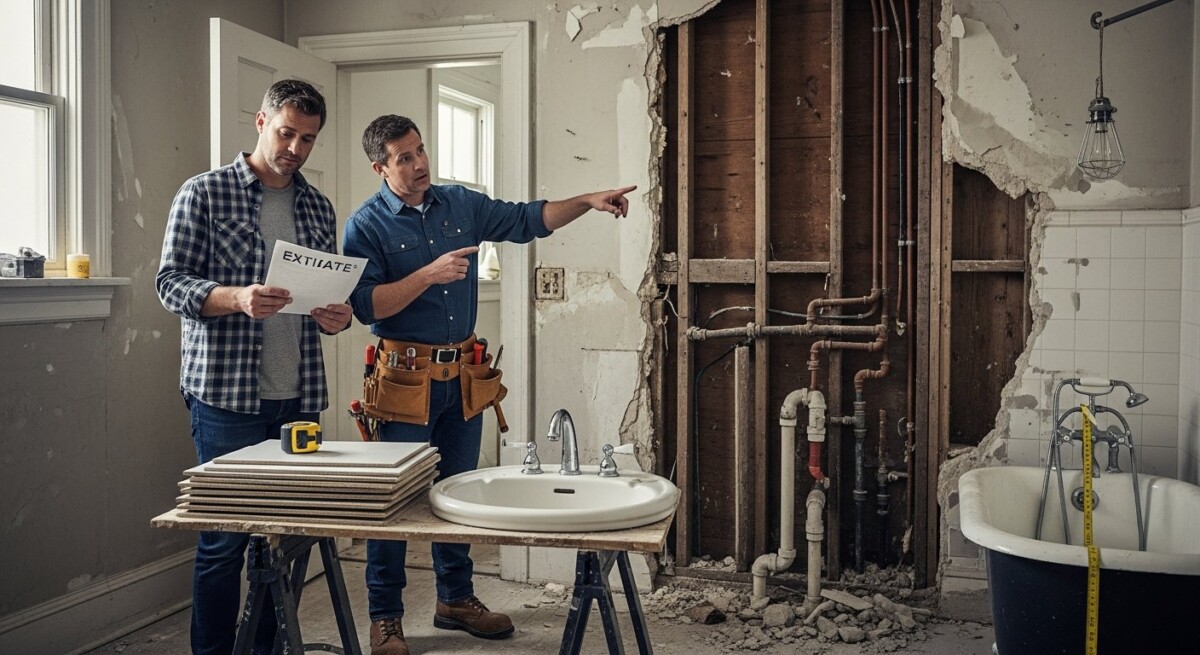
Every renovation is an exploration. You might plan to replace a shower, but you cannot see the state of the plumbing behind it until the tile is removed. Once the walls are open, you may discover water damage, outdated wiring, or an unlevel subfloor. These are not optional repairs. They are necessary corrections that must happen before new materials go in.
This is where many budgets fail because homeowners treat these discoveries as rare bad luck. In reality, they are the norm. Industry data suggests that roughly 40% of renovation projects uncover unexpected structural or mechanical issues. The key is not to hope for a clean tear-out but to prepare for the likely condition of your home. Older homes almost always have hidden issues. Even newer homes can reveal sloppy work from a previous remodel.
Set aside a contingency fund specifically for unknown conditions. A common rule of thumb is 10% to 20% of the total project cost, but that range depends on the age of your home and the scope of work. If you are opening walls, assume the higher end. This fund is not extra profit for the contractor. It is your insurance policy against the reality of construction.
Scope Creep: The Silent Budget Killer
Scope creep happens when decisions change after the work begins. You are standing in the showroom and see a nicer vanity. You decide to move a light switch because it is only a small change. You ask the electrician to add an outlet while they are already there. Each change seems minor, but they add up quickly.
Scope creep is not always the homeowner’s fault. Contractors sometimes suggest upgrades that sound reasonable but were not part of the original contract. A good contractor will document every change and its cost before proceeding. A poor one will do the work and present a larger bill at the end. If you do not have a clear change order process, you are vulnerable.
To protect yourself, define a formal process for changes before the project starts. Any modification to the original scope, no matter how small, should be written down, priced, and signed by both parties. This process keeps everyone accountable. It also forces you to weigh the value of each change against your overall financial goal. Before you approve an upgrade, ask yourself: is this a need or a want, and does it fit the vision I had when I set this budget?
Material Price Volatility and Supply Chain Issues
The days of stable material pricing are gone. Lumber, copper, and even basic drywall have seen dramatic price swings in recent years. A quote that is valid for 30 days may be meaningless in 60 days. If your contractor prices materials at the time of ordering, you are exposed to market fluctuations. If they locked in prices early, you may be protected, but you need to confirm that in writing.
Supply chain delays also affect budgets. When a specific tile or fixture is backordered, you have two choices: wait or substitute. Waiting extends the timeline, which increases labor costs if your crew is paid by the week. Substituting often means paying more for a comparable product because you are shopping in a hurry. Both paths lead to the same place: a higher final bill.
Mitigate this risk by making material selections early and confirming availability before signing the contract. Ask your contractor which items are in stock and which require lead times. For custom items, order them as soon as possible. If a product is on backorder, choose an alternative before the project starts. Do not leave these decisions for the middle of construction.
The Labor Cost Reality: You Get What You Pay For
Hiring the lowest bidder is a classic way to blow a budget. Low bids often reflect lower skill levels, insufficient insurance, or a contractor who plans to cut corners. When a subpar worker makes a mistake, you pay to fix it. When an uninsured worker gets injured, you may pay for medical bills. The cheapest upfront price rarely results in the cheapest final price.
Quality labor costs more per hour, but it saves money through efficiency and accuracy. A skilled carpenter frames a wall correctly the first time. An experienced electrician avoids code violations. These professionals also communicate better, which reduces the risk of misunderstandings and expensive rework. When you compare quotes, look at the crew’s experience and the contractor’s track record, not just the hourly rate.
A reliable way to find vetted professionals is to use a lead service that pre-qualifies contractors. Platforms like Home Remodeling Leads connect homeowners with contractors who are actively seeking work and have been screened for reliability. This reduces the risk of hiring a fly-by-night operator. You still need to check references and verify licenses, but you start with a higher-quality pool of candidates.
Financing Mistakes That Inflate Costs
How you pay for a renovation matters as much as what you pay. Using a high-interest credit card for a large project is a recipe for disaster. Even a home equity line of credit can become a burden if the project runs long and interest accrues. Before you start, calculate the true cost of financing, not just the sticker price of the renovation.
A common mistake is financing the project without a buffer. If your loan covers the estimated cost plus a 10% contingency, you are in a good position. If it covers only the estimate, you will be scrambling when the hidden conditions appear. That scramble often leads to bad decisions, like pausing the project mid-way or borrowing from a more expensive source.
Plan your financing to include the contingency fund. If you do not use it, you can apply it to the principal or pocket the savings. If you do use it, you avoid the stress of an unfinished project. This is one of the easiest ways to protect your budget because it forces you to acknowledge that surprises are likely.
Communication Breakdowns Between Owner and Contractor
Most budget failures are not caused by malice. They are caused by miscommunication. The homeowner expects one thing, and the contractor delivers another. The homeowner assumes a price includes certain work, and the contractor assumes it is extra. These gaps are avoidable with clear, documented communication.
Schedule a weekly check-in with your contractor. Review progress, upcoming tasks, and any pending decisions. Do not rely on verbal agreements. Follow up every conversation with a short email summarizing what was discussed and what was decided. This creates a paper trail that protects both parties. If a dispute arises, you have a record of the agreement.
Also, be honest about your budget with the contractor. If you tell them you have a hard ceiling of $30,000, they can guide you toward choices that fit that number. If you keep the number secret, they may propose options that are out of reach. A good contractor wants to deliver a successful project. They cannot do that if they do not know your constraints.
How Contractors Can Avoid These Pitfalls
Contractors face the same budget pressures from the other side. A homeowner who underestimates their own budget will often blame the contractor for the overrun. This creates conflict and damages reputations. Contractors can protect themselves by being transparent about potential issues during the bidding process.
When you provide a quote, clearly state what is included and what is not. List your allowances and your assumptions about the home’s condition. Recommend a contingency fund even if the homeowner does not want to hear it. This documentation protects you if the homeowner pushes back on a change order later. It also builds trust because you are demonstrating expertise.
For contractors looking to grow their business, finding clients who are serious and prepared is half the battle. A service that provides bathroom remodeling leads can help you connect with homeowners who are actively seeking services and have demonstrated intent. These are not tire-kickers. They are people who have asked for a quote, which means they are further along in the decision process. Working with serious clients reduces the risk of budget disputes because the client understands the value of the work.
A Framework for a Realistic Renovation Budget
Building a budget that survives contact with reality requires a specific process. Start by defining your goals clearly. What is the must-have outcome, and what is a nice-to-have? Then research realistic costs for your specific project type in your area. Get at least three detailed bids and compare the assumptions behind each one.
Once you have a realistic estimate, add your contingency fund. For a cosmetic update, 10% may suffice. For a structural renovation or a project in an older home, use 20%. Then add a second buffer for financing costs and temporary living expenses if you need to move out during the work. This total is your true budget.
Here is a quick checklist to keep you on track:
- Get at least three itemized bids that list labor, materials, and allowances separately.
- Add a 10% to 20% contingency fund for unknown conditions.
- Select all materials and fixtures before signing the contract.
- Confirm product availability to avoid mid-project substitutions.
- Use a written change order process for any modification, no matter how small.
Following this checklist does not guarantee a perfect project, but it dramatically reduces the chance of a financial disaster. The goal is not to avoid every surprise. The goal is to have a plan that absorbs the surprise without breaking your finances.
The Role of Professional Connections
Renovation success often comes down to the quality of your contractor. A skilled, honest professional will flag issues early and suggest cost-effective solutions. They will also respect your budget by presenting options rather than making unilateral decisions. Finding that person is the most important step you can take.
If you are a homeowner, do not rush the hiring process. Interview multiple candidates, check their references, and visit a job site if possible. Ask about their experience with projects similar to yours. Ask how they handle change orders and unexpected conditions. Their answers will tell you a lot about how they operate.
If you are a contractor, focus on building a reputation for transparency. When you walk a job, point out potential issues before the contract is signed. This honesty might cost you a bid in the short term, but it builds a referral base that pays off for years. Homeowners talk to their neighbors. A reputation for fair dealing is your best marketing tool. If you need a steady stream of new clients, consider using a platform like Home Remodeling Leads to find homeowners who are ready to start their projects.
Renovation budgets fail for reasons that are predictable and manageable. The failure comes from a lack of information, a lack of process, or a lack of honest communication. You can address each of these. Start with a detailed estimate, prepare for hidden conditions, control scope creep, and hire a professional you trust. When you do that, the budget you set becomes a plan you can actually follow.
About the Author: Mason Caldwell